Hunger and Homelessness Awareness Week runs from Nov. 16 to 22 this year. Here is what hunger looks like in Jackson County.
Feeding America creates yearly reports on food insecurity. The 2025 data set covers the years 2019 to 2023. The report breaks down statistics by county, state and congressional district.
In Jackson County, approximately 7,430 people faced food insecurity in 2023. This is 17.2% of the total county population.
Of those 7,430 people, 71% lived in households at or under the North Carolina SNAP threshold, which is 200% of the federal poverty level.
In North Carolina overall, 15% of residents are food insecure. This puts Jackson County above the state-wide average.
This year, Hunger and Homelessness Awareness Week comes after SNAP benefits lapsed for nearly two weeks in the midst of a government shutdown.
SNAP benefits have now been restored.
Even before the lapse in SNAP benefits, more and more people were facing food insecurity.
“Prior to the SNAP cuts, at MANNA we have seen our highest number and people served across our 16-county footprint than we have in our 42 years of history,” MANNA FoodBank director of marketing and communication Micah Chrisman said.
Feeding America, a national nonprofit dedicated to increasing access to food, published a press release on Nov. 13 reminding people of the importance of SNAP
“This moment must remind us that turning off SNAP for more than 40 million people hurts all of us. Food should never be used as a bargaining chip. We can make SNAP stronger, and the people who rely on it should have a seat at the table as we work to improve it,” the press release says.
Jackson County Department of Social Services shares in their most recent annual report that the office received 2,678 applications for Food and Nutrition Services during the 2023-2024 fiscal year.
During the same fiscal year, Jackson County DSS spent $8,015,502 funding SNAP benefits according to their annual report. This accounts for approximately 7% of their yearly budget.
Chrisman says that roughly 90,000 people are enrolled in SNAP in North Carolina’s 11th congressional district, which includes Jackson County and most of Western North Carolina.
The Feeding America annual report says approximately 118,900 in the 11th congressional district are food insecure.
On WCU’s campus, HOMEBASE provides several resources for students facing food insecurity including a food pantry and weekly meals. This organization is a collaboration between Baptist Children’s Homes and Western Carolina University.
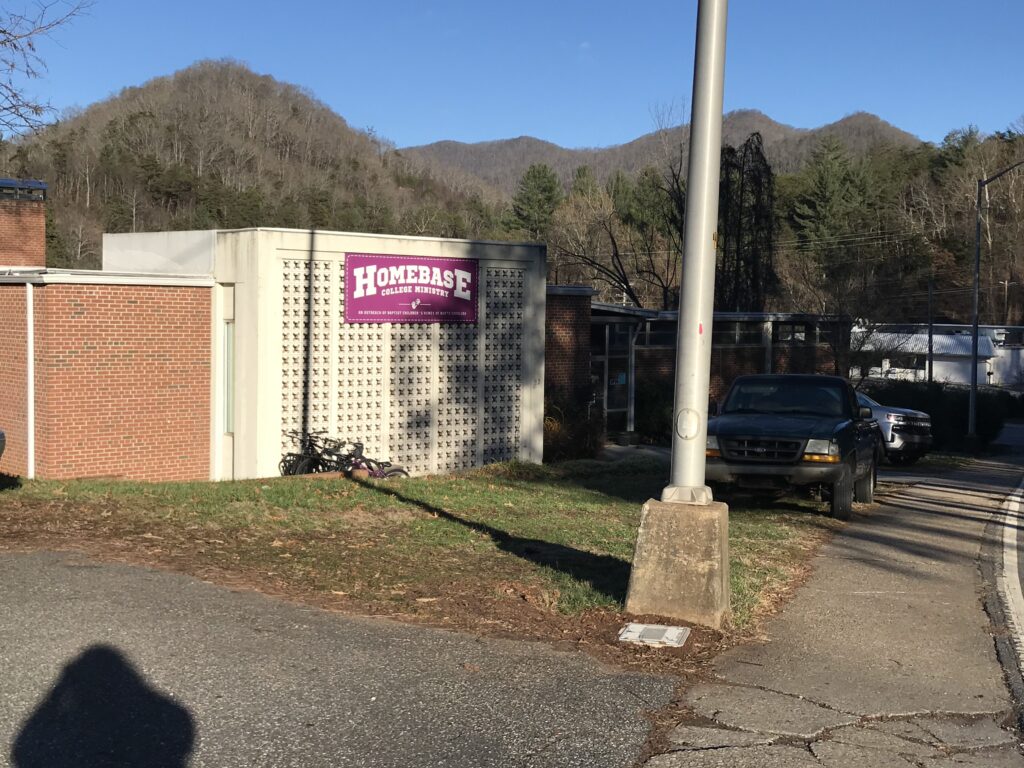
In 2024, HOMEBASE served 8,512 meals through their weekly meals and food pantry.
The HOMEBASE food pantry supplies students with canned goods, grab and go items, toiletries and more.
“We have a lot of campus organizations, individuals, faculty and staff that donate on a regular basis to help keep it stock up as well,” Director Jim Dean said.
Every Monday, HOMEBASE hosts weekly meals for students. On Monday, Nov. 17, HOMEBASE hosted a Thanksgiving themed meal. Dean says attendance for these meals stays steady throughout the year.
“The Monday meals are pretty consistent about every week. We tend to have more requests near the end of the semester when students are running out of swipes,” Dean said.
After almost a decade of providing these services to WCU students, HOMEBASE will be closing indefinitely on Dec. 5 when Dean retires. Dean says that students will still be able to access HOMEBASE food resources by request through the end of the year.