Western Carolina University is inviting all students, faculty and staff to step outside and reconnect with the mountains through the WNC Mountain Life Bingo game, a campus-wide program made to encourage exploration and community connection.
The bingo challenge is part of Western Carolina University’s 2026 campus theme, now in its second year, which focuses on mountain culture and community wellbeing following Hurricane Helene. The theme highlights the Appalachian environment, Cherokee traditions and the importance of connecting to nature and local communities.
The WNC Mountain Life Bingo game runs from Jan. 12 to Feb. 17 and is open to all students, faculty and staff, including distance and Biltmore Park learners. Some activities offer virtual alternatives to ensure everyone can participate.
Like traditional bingo, participants complete five activities in vertical, horizontal or diagonal rows and submit photos of each completed activity to Executive Assistant to the Vice Provost Alei Coleman by email.
Prizes are awarded on a first-come, first-served basis. Top prizes include a Catamount Climb race-day packet with entry to the April 11 half-marathon or 5K, as well as Bardo Arts Center “bundles” that include exhibit catalogs and a pair of tickets to six performances during the 2026-2027 BAC Performance Hall season. Campus Theme t-shirts are also available while supplies last. Prizes were donated by Campus Recreation and the Bardo Arts Center.
“Organizers hope the game strengthens participants’ connection to mountain life, their communities, and each other. They also hope that the bingo format encourages participants to try some new activities,” said Coleman.
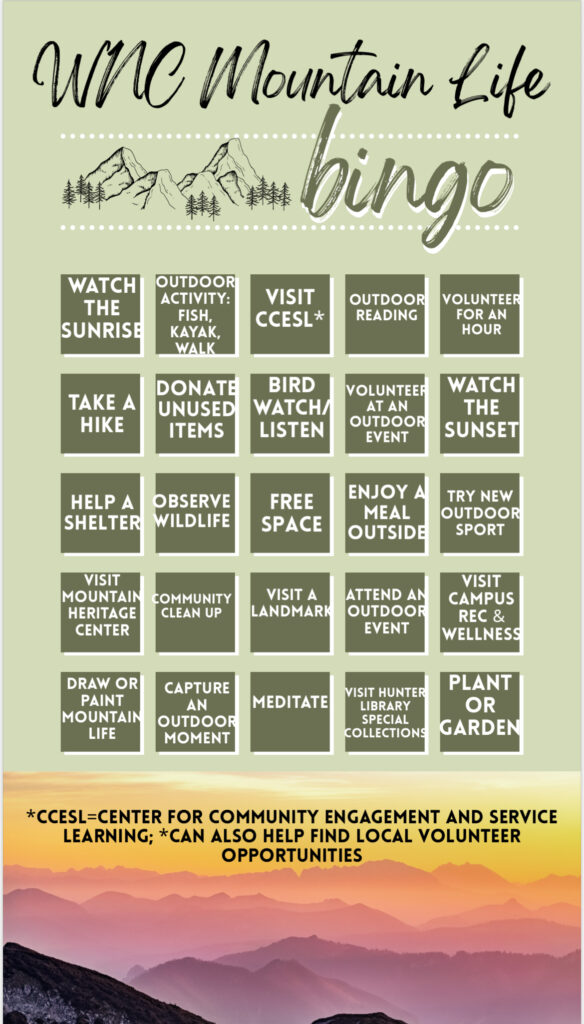
The bingo card includes a wide range of activities made to appeal to various interests while still connecting participants to mountain life. Some squares encourage reflection, such as watching a sunrise or sunset, birdwatching, or enjoying a meal outdoors. These activities invite participants to recharge and connect with the natural environment around them.
Campus and community spaces are also featured, with activities that encourage visits to locations such as the Mountain Heritage Center, Hunter Library Special Collections, local landmarks and the Campus Recreation & Wellness Center.
“One highlight has been seeing students actively exploring campus to complete their bingo squares. The Mountain Heritage Center visit has been the biggest challenge so far, as its gallery has been closed in preparation for a new exhibit opening January 22,” said Coleman.
Other activities emphasize movement and community engagement. Participants can hike, walk, kayak or try a new outdoor sport. Service-oriented activities may include volunteering, donating unused items, taking part in community cleanup or visiting the Center for Community Engagement and Service Learning to learn more about service opportunities.
Coleman said the diversity in the activity list allows the bingo game to appeal to many interests while still tying into the mountain life theme.
“It also allows those who don’t live in the mountain region to participate meaningfully by focusing on broader ideas of community and connection,” said Coleman.
The bingo challenge was inspired by a campus-wide bingo game once organized by retired staff member Kellie Monteith. Her version required participants to complete the entire card to earn a t-shirt. While the current program cannot offer shirts to every winner, her initiative sparked the revival of a campus bingo activity.