A version of this story was published in The Western Carolinian and The Sylva Herald Jan. 28 edition
New North Carolina House Bill 318, called the Criminal Illegal Alien Enforcement Act, is requiring sheriffs to work even more closely with Immigration and Customs Enforcement.
According to the bill, jail administrators would be required to notify ICE within two hours of when a prisoner with an ICE detainer would otherwise be released. The bill also includes immunity provisions that would shield law enforcement from civil or criminal liability for actions taken while following Homeland Security procedures.

An ICE detainer requires the law enforcement agency holding the person charged to notify ICE when they would be set for release and to hold them for as long as 48 hours afterward so ICE can take custody.
According to assistant chief of Sylva Police Robbie Carter, at least one person has been confirmed to be deported since the bill went into effect in Jackson County.
“I do know there was an individual that I arrested for driving while impaired,” Carter said. “His attorney had called for a trial on my DWI and stalking charge and before that trial date happened, I was notified that it wouldn’t be necessary because he had been deported.”
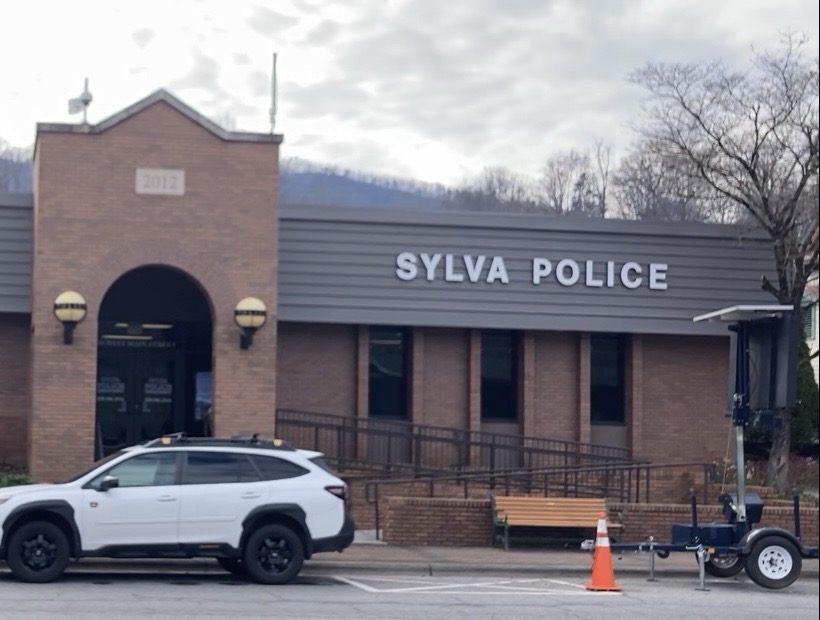
Carter said the bill will not change much, as many sheriffs were already reporting this information to ICE. He said the only thing that the bill will do is bring uniformity now that all sheriffs are required to comply.
For the Sylva Police Department, this bill will not affect them much as it deals mostly with detainment, and all NC prisons are maintained by the sheriffs.
“Really the only thing that directly applies is it says that I’m not civilly liable if somebody’s picked up and winds up getting picked up on an ICE detainer,” Carter said.
Carter emphasized that he does not make immigration status a factor when conducting arrests and that the Sylva Police Department does not have the authority to enforce federal immigration law.
“I’ve been a police officer 21 years, and I don’t think I’ve ever asked anybody what their immigration status is,” Carter said. “I’m just dealing with what crime they’ve committed in North Carolina.”
The bill serves to strengthen House Bill 10, passed in late 2024 after former Governor Cooper’s veto was overridden in a 30-19 vote.
One of the parts of HB 10 requires county jails to determine the immigration status of anyone charged with the listed offenses, and to notify ICE.
- Possession, creation, or intent to distribute a controlled substance
- Homicide
- Rape and other sex offenses
- Kidnapping and abduction
- Human Trafficking
- Criminal Gang Activity
- Felony assault or a class A1 misdemeanor
- Misdemeanor death by vehicle
- Assault with a deadly weapon
- Any violation of a Domestic Violence Protective Order
House Bill 318 went into effect on Oct. 1st and modified the list of offenses for which the county jail must attempt to determine the legal residency of anyone charged that was determined by HB 10 to include the following:
- All felonies
- This includes crimes like robbery, arson, fraud and money laundering, serious theft, and embezzlement
- Any offense involving impaired driving
If the status of the person charged cannot be determined, the jail must contact ICE and the person detained must be held for a period of up to two hours, allowing ICE time to issue a detainer.
If the law enforcement agency cannot determine the person’s legal residency status they must commit them to a facility to be fingerprinted and held for a period of two hours after informing ICE.
Chris Cooper, a WCU political science professor, says the bill’s main goal is to give law enforcement more power in immigration-related cases.
He said this bill reflects a trend of similar immigration bills spreading across the country.
“We have definitely seen sort of a spate of immigration bills introduced, not just across the Southeast, but across the country in Republican-leaning states,” Cooper said. “This is a good example of the nationalization of American politics.”
Cooper says that, like most public policy, the bill has both a policy and political goal.
“The message is Republicans are tough on crime. Republicans are tough on immigration and Democrats are not,” Cooper said. “That’s what the people filing the bill, I think, want to signify, in addition to them believing it’s the right policy.”
Tensions between federal authorities and civilians are already high, and Cooper says this bill could heighten them.
“Tensions are already incredibly high, and I do not see that waning anytime in the near future,” Cooper said. “This certainly won’t help.”
Cooper emphasized that people should pay attention to public policies like this because it can affect the people they know and their communities.
“This will affect people’s lives,” Cooper said. “People will be – it’s been argued it’s a good thing – treated very differently by the police, by ICE if they are pulled over.”
The bill had a rocky start, with Gov. Josh Stein vetoing the bill, saying it was unconstitutional. Stein cited the section requiring sheriffs to hold people for up to 48 hours after they would otherwise be released.
“The Fourth Circuit is clear that local law enforcement officers cannot keep people in custody solely based on a suspected immigration violation,” said Stein in a statement. “But let me be clear: anyone who commits a serious crime in North Carolina must be prosecuted and held accountable regardless of their immigration status.”
The NC General Assembly overrode the veto with a vote of 72-48 in the House of Representatives and a vote of 30-19 in the Senate on July 29th, reaching the required supermajority to pass.
The votes were cast in a near perfect line between the parties. All but one Democrat, Rep. Carla Cunningham, voting against the override and all Republicans voting for it.
While speaking in support in the bill on the house floor, Cunningham said she was going to share her unapologetic truth and that people need to realize it matters where the immigrants are coming from, not just the numbers.
“All cultures are not equal,” Cunningham said. “I suggest they must assimilate, adapt to the culture of the country they wish to live in.”
The Jackson County Sheriff’s Department did not respond to multiple requests for comment. Karen Mason, the head of the department at Criminal Justice and associate Professor Clayton Drummond declined to answer. All other professors of the Criminology and Criminal Justice program could not be reached for comment. Janet Ford, professor of Business Law, did not respond to requests for comment. Representatives at Pisgah Legal Services declined to comment.
Related stories:
‘All cultures are not equal’: Rep. Cunningham’s remarks on HB 318 cause backlash in Charlotte | WUNC News
N.C. General Assembly expands ICE detainment authority, overriding Stein’s veto on HB 318 – Daily Tar Heel
HB 318: What you need to know about North Carolina’s new immigration law