Students seeking campus early voting sites for the primaries at three NC universities face an uphill battle in court with the clock ticking.
Story by Sarah Michels. Carolina Public Press published Feb. 6. Republished.
Students at three North Carolina colleges who want early voting sites on campus this primary election took the issue to federal district court after their county election boards and the State Board of Elections denied their request.
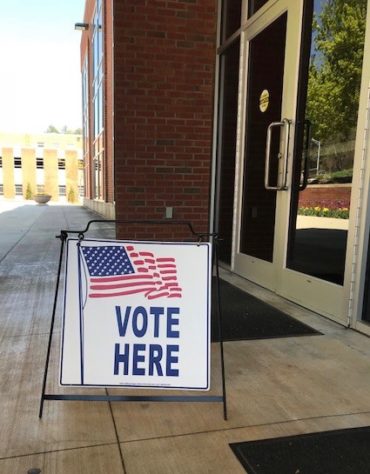
About a dozen people sat in a Greensboro courtroom Thursday, where the fate of those campus early voting sites sat in the hands of one man, U.S. District Court Judge William Osteen Jr.
There’s mere days until early voting begins in North Carolina on Feb. 12, a fact repeated often by Osteen and the election board defendants during the hearing.
[Subscribe for FREE to Carolina Public Press’ Daily, Weekend and Election 2026 newsletters.]
Throughout the two-hour preliminary hearing, Osteen appeared skeptical of — and at times, annoyed at — the plaintiffs’ arguments.
Whatever decision Osteen makes will be subject to appeal, but it’s unlikely there will be time to resolve any appeal before the election begins, making his ruling even more consequential.
How did we get here?
The College Democrats of North Carolina and students from North Carolina Agricultural & Technical State University, University of North Carolina-Greensboro and Western Carolina University filed suit in late January, two weeks after the state elections board approved early voting plans without sites on their campuses.
In their suit, they argued that the exclusion of these campus early voting primary sites amounted to age-based discrimination and unfairly burdened students’ right to vote.
Requiring college students to travel to the nearest early voting site off campus to vote early is too high a hurdle, they argued. Many students lack a vehicle or access to reliable transportation. Their busy schedules, limited finances and lesser knowledge of the local geography may also be obstacles to voting off-campus, particularly for first-time voters.
Early voting in particular is important, they say, because younger voters tend to utilize North Carolina’s same-day registration — which is only offered during early voting — at a higher rate than other populations.
The election board defendants objected.
State Board attorney Phillip Strach said election boards have to consider all factors across the entire county when weighing their decisions.
“It’s not just about the personal preferences of students or youth voters,” he said.
Changing the plan a week before early voting begins would take work, Strach added, citing a list of logistical and timing issues associated with any change compiled by Guilford County election director Charlie Collicut.
Election officials would have to formally request space at NC A&T and UNCG from Feb. 12 to Feb. 28, engage campus police in emergency management training, find and train 20 poll workers to staff the sites each day, deliver and test voting equipment and order additional ballots, among other tasks — all in less than a week.
Collicut wrote an affidavit that he was “very concerned” about the prospect, and thought it would impede planning and resources available at the county’s other sites.
Campus differences in early voting
The situations are not the same in Jackson County, home to WCU, and Guilford County, where NC A&T and UNCG are located.
Western Carolina University has been used as an early voting site in primary and general elections since 2016, including both presidential and midterm years. An analysis conducted by WCU political science professor Chris Cooper shows that the campus site has boosted youth early voter turnout and consistently produced the highest proportion of same-day registrants.
On the other hand, NC A&T and UNCG have never had early voting sites during midterm primary elections, under both Democratic and Republican county board majorities. NC A&T has been used for presidential general election early voting since 2004, while UNCG has been used since 2012. Both were added to presidential primary early voting plans in 2020 and 2024.
Last year, election boards shifted from Democratic to Republican control after a controversial election law shifted election board appointment power from the governor to the state auditor.
The new majority-Republican Jackson County board decided to consolidate the two typically used Cullowhee early voting sites — one at the Cullowhee Recreational Center, and the other on WCU’s campus. The two sites were less than 2 miles apart, and board members said they wanted to save money in case of a second primary.
Board Republicans preferred to eliminate the WCU campus site, citing the recreational center’s better parking situation and greater familiarity in the broader community.
In Guilford County, the board decided to add two midterm primary early voting sites. Board Democrat Carolyn Bunker suggested a series of sites, including the campus sites. The board majority disagreed, instead placing the new sites at the Lewis Recreation Center and Jamestown Town Hall to geographically cover the area.
Republican Chair Eugene Lester III previously told Carolina Public Press the board wasn’t going to single out one group of voters as more important than another. The board considers a number of variables, including turnout, to determine which sites best serve the county, he added.
During the preliminary hearing, Osteen asked plaintiff attorney Uzoma Nkwonta how not including campus early voting sites violated Guilford County students’ right to vote if they had never had one during a midterm primary before.
Nkwonta responded that while they are challenging the decision now, for the 2026 primary, it’s possible students’ voting rights were violated in the past without a challenge. Osteen did not seem convinced.
“If this was a presidential election, I might find otherwise,” Osteen said.
WCU did not have the same issues, since it had been used for every election in the past decade. However, Jackson County Board of Elections attorney Patrick Flanagan argued that even an explicit removal of a longstanding campus site did not violate students’ right to vote.
“Early voting is not a constitutional, fundamental right,” he said.
NC A&T and UNCG students are able to vote on Election Day on campus, while WCU students do not have an on-campus Election Day site. Both groups of students may use absentee by-mail voting.
Besides, Flanagan argued, the distance from the center of WCU’s campus to both the campus site, at the Health and Human Sciences building, and recreational center were “about the same.”
According to a Feb. 3 email between Jackson County election director Amanda Allen and transit officials, there will be a van shuttle provided to transport students between campus and the recreation center on weekdays during the early voting period. Flanagan said that solved any transportation concerns.
Nkwonta disagreed. Students are aware of the campus transit system, which can take them between the center of campus to the Health and Human Sciences building. The new transportation plan, however, lacks details and familiarity, he said.
Is it too late?
Before Osteen even considered the substance of the lawsuit, he argued with Nkwonta at length about the timing of it all.
“Even if I were inclined to say that an early voting site should be established … at NC A&T and UNCG, what’s the evidence that that can be done at this point?” he asked.
What if, say, the Health and Human Sciences building on the WCU campus were booked during early voting days? Were the colleges prepared to establish an early voting site in less than a week? What if they changed their minds between December about holding early voting on campus?
Nkwonta said he couldn’t say for certain that the sites in question would be available, but that there was a high likelihood that the colleges would be able to do it, based on their historical experience of hosting early voting.
Osteen expressed frustration. He can’t “magically make a polling place appear” if the ones the plaintiffs are counting on fall through, he said.
Nkwonta suggested that Osteen issue a ruling that, in that case, election boards would have to devise a new early voting plan that ensures more accessibility to students without dictating a specific location.
A second timing issue in the case involves a federal rule called the Purcell principle. The rule essentially locks in certain election policies within a certain time of the actual election, so as not to confuse voters and create election administrative issues.
The election board defendants argued that students were too late. There was no time to change the early voting sites so close to Feb. 12 without violating the Purcell principle.
Nkwonta countered that the State Board set the schedule in the first place. Early voting plan deadlines for county boards were moved from Dec. 5 to Dec. 19. The board didn’t consider them until Jan. 13. Nkwonta argued that everything within that timeline would technically violate Purcell, so to follow Purcell would make it impossible to ever successfully challenge early voting plans.
Osteen said he would issue an order over the weekend, or at the latest, early next week.