In today’s United States it seems there is a lot of disagreements being dealt with aggression instead of understanding. WCU’s Center for Community Engagement and Service Learning wants to change that by hosting a series of civic dialogues throughout the school year on a variety of topics.
The civic dialogues are nonviolent conversations in which students, and others, are able to discuss public issues and collaborate with one another to come to a mutual understanding.
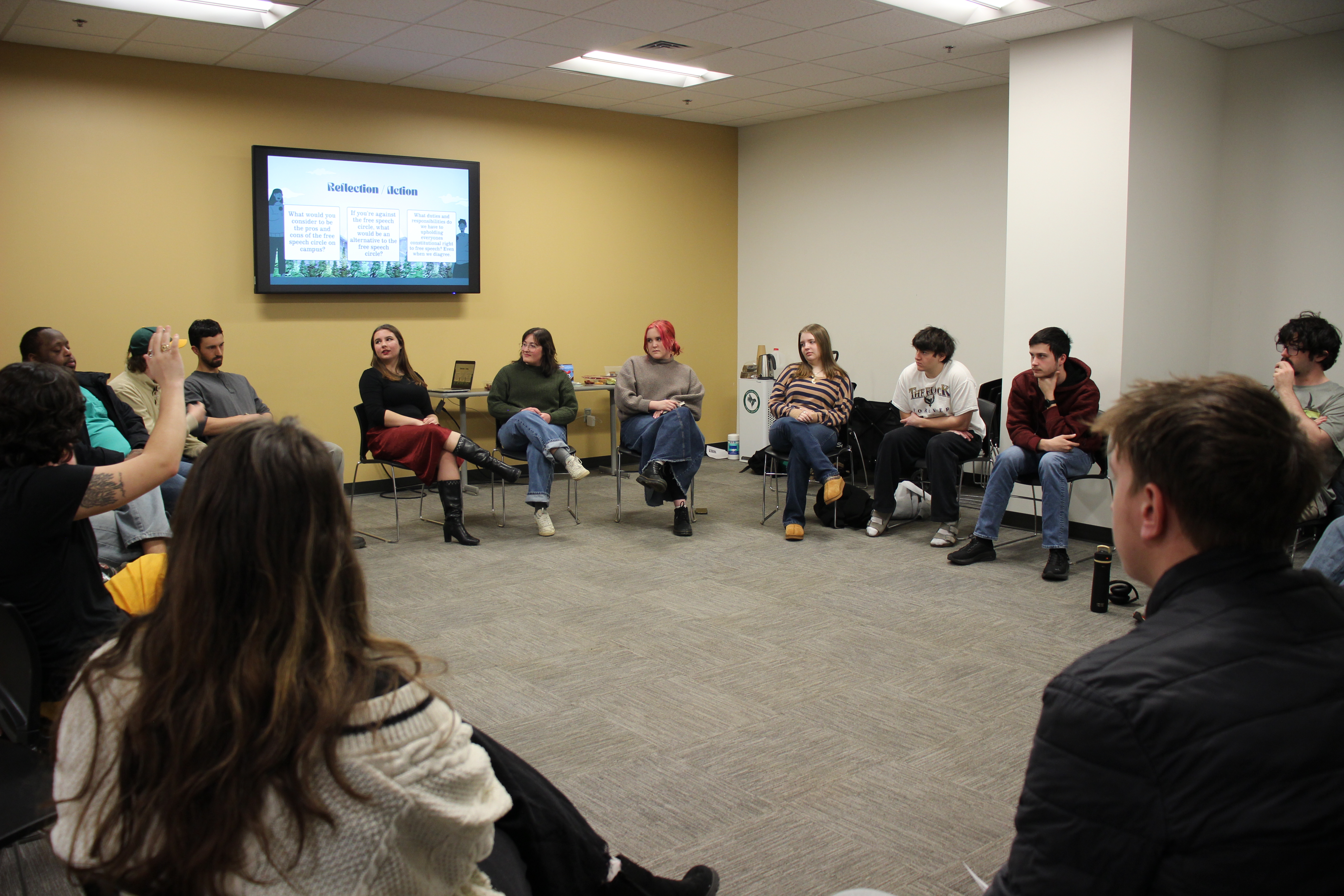
In a study by the University of Delaware, they found that civic dialogues help students strengthen their communication skills while in a safe and comfortable environment.
Trained student dialogue ambassadors choose the discussion topics and lead students through the open dialogues using the LEARN Model. With this method, they split the students into groups to discuss the 5 phases- launch, explore, acknowledge, reflect and notice.
Stella Chumney, a communication student and student ambassador, opened the first civic dialogue this year with a discussion on free speech.
“I really enjoyed the different perspectives that people had. We had people from all different types of places around the state, around the country,” Chumney said. “All different types of majors, not just comm majors or English majors.”
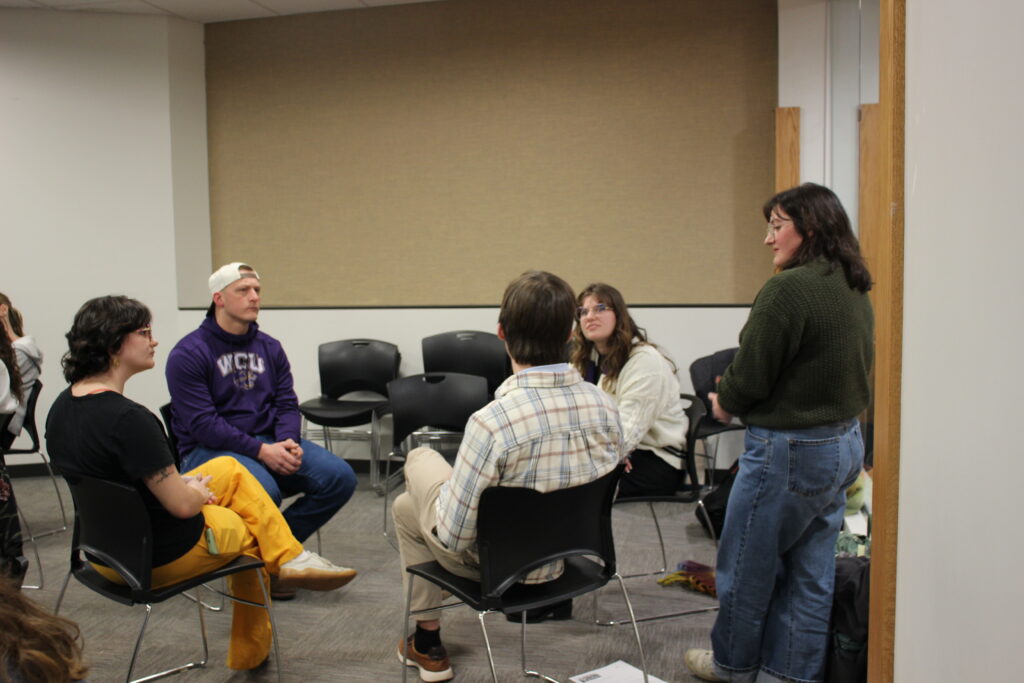
CCESL holds these civic dialogues for WCU students. Assistant Director of Civic and Community Engagement, Jenna Kubiak said she feels that with around 10-20, and even 40 people coming to each dialogue, the organization has been successful in their outreach.
“We have done some surveys in the past and a lot of students note that they feel more comfortable actually discussing controversial topics,” Kubiak said. “So that’s been really successful in my opinion.”
The next open dialogue will be Feb. 19 from 6:30 to 8 p.m. in the University Center Dogwood room. The student dialogue ambassadors will lead the discussion on diversity in schools. As a group, attendees will aim to answer the question, “what role does D.E.I play in higher education?”
There is no sign-up for the dialogues, but attendees will need their student ID number to sign in. Enjoy the comfortable and safe space that the student ambassadors create to share your opinion with other students on campus.