Story written by Written by Cory Vaillancourt, published at Smoky Mountain News, Feb. 10. Republished
Voters in North Carolina’s 11th Congressional District have endured years of disaster and instability, just as national trends are shifting hard against Republicans. Democrats believe this is their best chance in years to flip the gerrymandered seat currently held by Rep. Chuck Edwards (R-Henderson). Five candidates are asking for that chance.
This district’s recent political history reads like a cautionary tale for voters. Former Rep. Mark Meadows resigned and left his seat empty after becoming President Donald Trump’s chief of staff — just as the federal government was passing some of the largest spending packages in its history.
Despite a presidential pardon for federal charges, Meadows still has pending charges in Georgia and Arizona related to alleged attempts to subvert elections in those states.
Meadows’ successor, Madison Cawthorn, served one tumultuous term marked by several spicy controversies before Republican primary voters turned him out in favor of the relatively stable Edwards, whom they hoped would bring some measure of competence.
Meanwhile, Trump’s popularity has sagged among key groups since taking office, including with unaffiliated and suburban voters — creating headwinds for Republican candidates. The Epstein files aren’t helping.
Democratic strategists hold considerable optimism that a blue wave may be washing over the country in 2026. Throughout 2025, Democrats across the country posted a string of improbable headline victories that party officials and candidates interpret as evidence of a broader swing.
In March 2025, a Democrat claimed a seat in Pennsylvania’s state Senate for the first time in 136 years. In November 2025, Mississippi Democrats broke the Republican supermajority with a pair of flips in state Senate districts that were redrawn to erase racist gerrymanders. In December 2025, a Georgia Democrat won a seat in the state House that Trump had previously won by 12 points in 2024. By that point in 2025, the Democratic Party said that its candidates had won or overperformed in 225 of 253 special elections.
Most recently, on Jan. 31, Texas Democrat Taylor Rehmet capitalized on an astonishing 32-point swing, winning a state House district by more than 14 points that went for Trump in 2024 by 17 points.
Against this backdrop, the Cook Political Report has downgraded North Carolina’s 11th District from “Solid Republican” to “likely Republican,” reflecting both the national environment and, perhaps, local voter dynamics.
Cook rates the district at R+5. Nonpartisan redistricting site davesredistricting.org says NC-11 has performed at 51.9% for Republicans from 2020 through 2024, however Democrats performed far lower, at 45.9%.
A recent change in the Republican Party’s district leadership has resulted in several resignations that could impact traditional campaign support for candidates throughout the 11th District.
Critics of Edwards argue that this district is ripe for change not only because of national trends but also because of his recent legislative record.
First and foremost, he’s endured criticism from Democrats and Republicans alike for his response to Hurricane Helene’s impact on parts of Western North Carolina, where communities are still waiting for federal storm aid. Edwards claims he authored a $110 billion bill in 2024, which did include some relief — but only an estimated $9-15 billion towards $60 billion in damages. Current estimates put the state near the low end of that range in terms of actual aid received.
Disaster relief aside, Edwards has shown a pattern of failing to answer questions about his positions and record, and repeatedly refusing invitations to participate in public forums or debates where constituents could question him directly — until a raucous forum in Asheville last March, during which a disabled veteran was removed from the audience after shouting at Edwards.
Largely at issue is Edwards’ alignment with Trump, and whether that’s been good for Western North Carolina.
Democrats, meanwhile, have their own issues.
Rural Democrats have long bemoaned a disconnect between the national party and rank-and-file faithful that has resulted in a mass exodus from the party in North Carolina — in favor of unaffiliated voters, who now outnumber both Democrats and Republicans.
Some even complained about the “crowning” of Kamala Harris after President Joe Biden decided not to seek reelection after a disastrous debate performance in 2024. Never mind that Harris was voted in as the nominee by members of her own party — the stain of party elites “anointing” candidates is a hard one to wash away.
That attitude has even permeated the NC-11 Democratic Primary, with some candidates believing they haven’t been treated fairly. Last August, Moe Davis, Zelda Briarwood, Chris Harjes and Paul Maddox signed a letter to the North Carolina Democratic Party, the NC-11 Democratic Party and Buncombe County Democrats alleging that the selection of Jamie Ager as the sole speaker at the party’s annual gala was at odds with the party’s fundamental values.
Ager, long perceived as the frontrunner due to his political pedigree and fundraising success, has tried to remain above the fray.
The gala misstep cost the NC-11 chair his position as the party eventually relented and moved on, but the attacks on Ager haven’t stopped.
On Feb. 5, candidate Richard Hudspeth sent a letter to the Buncombe Dems, calling on the party “to reverse recent decisions that raise concerns about neutrality, access and fairness ahead of the upcoming primary.”
At issue is an upcoming “victory kickoff” rally where candidates were invited to speak — but only those willing to pay $500 for the opportunity. Sure, county parties must fundraise to support election-related activities, but Hudspeth called the whole situation “pay to play.”
With early voting for the March 3 Primary Election beginning on Feb. 12, voters must now decide which of the five candidates — Ager, Briarwood, Hudspeth, Maddox and Lee Whipple — are best equipped to defeat what they all feel is a vulnerable incumbent who hasn’t delivered for a sprawling congressional district that, according to the 2023 American Community Survey, has a median age 20% higher than the state and the country, a per capita income about 90% of the state and country, a poverty rate higher than the national average and a median home value 10% higher than the state.
Lee Whipple
Whipple enters the NC-11 Democratic primary as an outsider, a civil engineer whose campaign centers on technical competence rather than party machinery. Raised largely in Old Saybrook, Connecticut, Whipple says he grew up balancing two cultural perspectives through a father from rural Georgia and a mother from the Northeast.
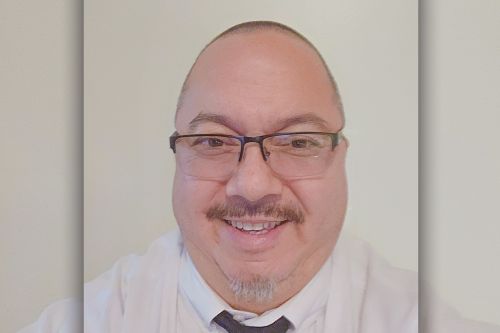
That background led him to Georgia Tech, where he earned a degree in civil engineering and began a career spanning multiple states. Early work in Atlanta included streetscape projects connected to the 1996 Olympic Games before later professional stops in New Jersey and New Hampshire, prior to earning licensure in North Carolina.
Whipple’s work in Western North Carolina focuses on slope failures, dam rehabilitation and small bridge projects. He has been active in the American Society of Civil Engineers and says that experience informs his views on infrastructure vulnerabilities exposed by Hurricane Helene.
Outside his profession, Whipple describes himself as widely read, particularly in history, military strategy and political economy, interests he traces back to the Sept. 11, 2001, attacks. He is also an internationally rated chess player, a musician and a longtime member of Toastmasters, experiences he says have shaped his approach to strategy, communication and public presentation.
Asked to situate himself politically, Whipple consistently focuses his candidacy around Hurricane Helene and the federal government’s response. He argues that Western North Carolina’s recovery has been slowed by bureaucratic delay and insufficient urgency, a view that informs nearly every policy answer he offers.
That sense of perseverance extends to his critique of the Democratic Party’s internal dynamics. Whipple said he has felt marginalized by party structures and believes early momentum and fundraising advantages have distorted the primary field.
“[Democrats] maybe helped sort of anoint [Ager] as the candidate that they wanted to see,” Whipple said.
Whipple emphasized that he was not accusing any formal party organization of wrongdoing but said the perception of favoritism has been difficult to ignore. He recounted an incident at the gala where he said he was denied the opportunity to purchase a ticket or speak, despite being an active candidate at the time. He said he was ultimately asked to leave the event.
Those experiences, Whipple said, reinforced his belief that ideas — not access — should drive Democratic campaigns in the district.
Turning to Edwards’ record, Whipple said the congressman’s limited engagement has been disappointing.
“He needs to answer questions to his constituents,” said Whipple. “As a constituent, I would be happier to have him tell us a little bit about what’s going on.”
On constituent outreach, Whipple expressed support for Edwards’ mobile “Carolina Cruiser” concept but criticized its execution. He said he would rely on more modest, direct engagement, traveling the district himself and speaking in public spaces using portable equipment he already owns.
Countering Edwards’ appeal to rural voters, Whipple focuses on policy choices rather than personal background. He cited Edwards’ positions on health care access, SNAP funding and housing as evidence that the congressman has drifted away from the needs of working-class constituents, particularly in rural areas.
“He came from rural roots, and he grew up in a family that was lower-middle class. I guess he’d say ‘Not well off,’” Whipple said. “He comes from that background, but he seems to forgotten all the things that help his constituents.”
Foreign policy, Whipple said, has become impossible to ignore, and his positions are largely interventionist on humanitarian and democratic grounds. He voiced strong support for Ukraine, called for expanded humanitarian aid to Palestinians in Gaza, opposed unilateral action against Venezuela’s leadership and emphasized respect for Danish sovereignty regarding Greenland.
Pressed to identify instances where Edwards has benefited the district, Whipple pointed to Edwards’ eventual support for Medicaid expansion while serving in the North Carolina General Assembly, though he characterized that vote as reluctant and overdue.
Looking ahead, Whipple said his ultimate measure of success if he’s elected would be tangible disaster relief. He said that even a single term in Congress would be meaningful if it resulted in substantial federal investment in Western North Carolina’s recovery.
If he does not win the primary, Whipple said he would support the Democratic nominee, though he was candid about the financial and professional constraints that would limit his ability to campaign extensively on another candidate’s behalf.
“I’m the most qualified candidate to help our community recover from Hurricane Helene,” said Whipple. “As a professional civil engineer, I have the experience working with city, state and federal agencies to get permits for projects, and that means that I’ve read through all kinds of technical documents, just like bills and laws that are going to have to be passed. I can speed read this stuff and get to the required information that really applies to the things that we need to pass in Congress.”
Paul Maddox
Maddox grew up in the Bent Creek community outside Asheville and graduated from Enka High School before enrolling at UNC-Chapel Hill, where he earned an undergraduate degree in biology with a minor in chemistry and later completed a PhD in 2003. After finishing his doctorate, Maddox and his wife, also a scientist, moved to San Diego for postdoctoral research and returned to Chapel Hill in 2013, where both joined the Department of Biology and continue to teach and conduct research. At the time of his entry into the race, Maddox was registered to vote in Orange County, but has since changed to Yancey County.
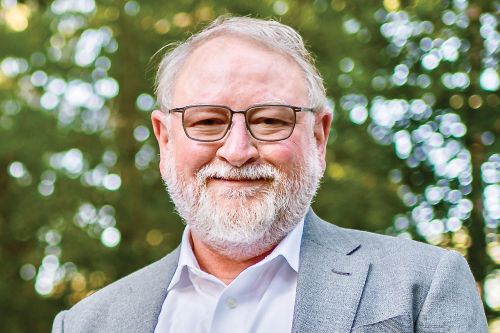
His campaign centers on accountability, accessibility and lived experience; Maddox describes himself as neither wealthy nor insulated from economic pressure, emphasizing that his decision to run has come with personal financial risk. That perspective, he says, shapes how he views representation in a district that spans rural mountain communities and small cities.
Edwards’ limited engagement has left Maddox feeling excluded from the democratic process.
“I don’t feel represented,” he said. “I don’t feel like there’s any accountability in Chuck Edwards or most of the Republican Party these days.”
If elected, Maddox said he would prioritize direct communication with both the press and constituents across the district. He described his rural residence as an advantage rather than a limitation, saying everyday interactions outside population centers keep him grounded in voter concerns.
That approach, he said, would stand in contrast to Edwards’ mobile “Carolina Cruiser,” which Maddox characterized as staff-driven rather than personally led.
“I think Chuck is probably just not a very charismatic person, and so not he’s not a people person, and that’s why he’s not out there,” said Maddox. “I’m a people person. I don’t know how charismatic I am, but I love talking to people. I love meeting people and hearing their stories.”
Maddox said he believes representation requires time, patience and listening, even when that slows down a campaign schedule. He said those conversations, rather than polished messaging, are what allow an elected official to govern effectively.
Despite his wealth, Edwards has demonstrated great appeal to rural voters whose circumstances differ significantly from his own; Maddox contrasted the plight of working-class residents with Edwards’ personal fortune, arguing that lived experience matters when making policy decisions.
“I’m not a millionaire,” Maddox said. “I’m not taking a paycheck right now, and I’m trying to figure out how I’m going to pay my mortgage.”
Maddox said that gap in experience shows up in small but telling ways, arguing that wealth can insulate lawmakers from understanding the cumulative pressure of everyday expenses faced by working families.
Turning to foreign policy, Maddox offered clear positions across a range of flashpoints, emphasizing international law, sovereignty and restraint.
On Gaza, Maddox described the conflict as deeply complex and warned against rhetoric that erases entire populations, saying durable solutions require diplomacy rather than escalation. Addressing Greenland, Maddox rejected any notion of U.S. acquisition or pressure, emphasizing Denmark’s sovereignty and dismissing the issue as politically manufactured. On Venezuela, Maddox criticized U.S. interventionism and said regime change efforts violate international norms, regardless of views on a country’s leadership. On Ukraine, he voiced unequivocal support for the country’s defense against Russian aggression.
“I believe Putin is a criminal — a war criminal,” said Maddox.
Asked to identify any instances where Edwards has benefited the district, Maddox said he struggled to point to concrete achievements. He acknowledged early Helene-related funding but questioned Edwards’ follow-through and motivations, saying initial action gave way to inaction.
“I wish I could point to something and say, ‘You know what, that was a brilliant stroke. He stepped to the plate and really hit one out of the park for Western North Carolina,’ but I just can’t, off the top of my head, point to one,” Maddox said.
Looking ahead, Maddox said that if he only served a single term in Congress, he would want to be remembered for independence and fidelity to the people of Western North Carolina rather than party leadership. If he does not win the primary, Maddox said he would support the Democratic nominee and emphasized that political change requires collective effort rather than individual ambition.
“My mother didn’t raise no quitter, as we like to say in the country, but in that same vein, I’ll do anything I can to help the primary winner succeed,” he said.
In his closing pitch to voters, Maddox described himself as a problem-solver and team-builder who values deliberation over haste. He said his scientific background informs his approach to policy and emerging issues, including artificial intelligence and its economic and environmental implications for the region.
“I love, love, love Western North Carolina. I love the people here,” said Maddox. “I’m home.”
Richard Hudspeth
Hudspeth joined the NC-11 Democratic Primary last September as a family physician whose professional life has been spent largely in Western North Carolina, shaped by years of clinical work, health-system leadership and direct contact with patients navigating fragile rural health care infrastructure. Raised largely in Chicago, he moved to North Carolina in the 1980s and later earned his medical degree from UNC-Chapel Hill, beginning a career grounded in community medicine rather than specialty practice.
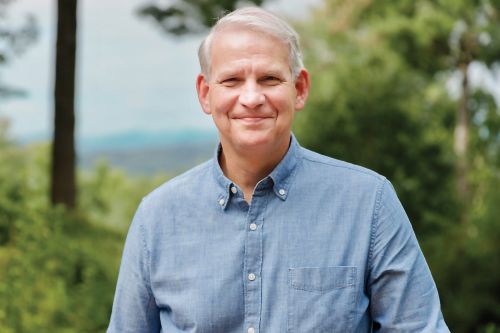
Early in his training, Hudspeth spent time providing care to impoverished patients at Mother Teresa’s Home for the Destitute and the Dying in Kolkata, India — an experience that influenced the direction of his career. Exposure to preventable illness and poverty-driven outcomes reinforced his belief that access to care is inseparable from public responsibility, and that health policy decisions carry immediate consequences for people with limited resources.
His commitment to that philosophy was readily apparent at a recent candidate forum in Henderson County. As Hudspeth was answering a question, a person appeared to be in medical distress. Hudspeth put the microphone down and rushed to the back of the room to provide assistance.
“All in a day’s work for a family doc,” he said.
The episode underscored a campaign centered on health care access and affordability. He’s penned a policy proposal that would include a $500 tax credit for people who grow fruits and vegetables or raise poultry at home — bolstering health and nutrition while also taking a bite out of the affordability crisis.
Concerns about internal party dynamics have also surfaced in Hudspeth’s candidacy, including the recent “ pay for play” allegations involving speaking opportunities.
“It sounds very undemocratic. Here we are in a Primary — really at this point critical in our nation’s history, as well as Western North Carolina’s — and they’re selling spots to get up and speak,” said Hudspeth. “Now, I don’t mind contributing to the Democratic Party and doing those things necessary as an individual, but as a candidate, it seems it’s pay for play. I think there’s a transparency problem. I think there’s a fairness problem. I find it distasteful.”
Linking those practices to broader frustration among Democratic and unaffiliated voters, Hudspeth noted long-term declines in party registration and engagement. He argues that voters disengage when they believe access and money shape outcomes more than ideas, qualifications or a demonstrated commitment to public service.
Hudspeth also criticized Ager’s campaign donors — billionaires, hedge fund managers and PACs funded by billionaires who he says profit from a broken health care system.
Accountability remains a central focus of Hudspeth’s criticism of Edwards. Drawing on years of advocacy for patients across the district, Hudspeth argues that limited willingness to answer tough questions reflects a deeper failure to represent constituents consistently and transparently.
Ideas for constituent outreach reflect that philosophy. Hudspeth has criticized Edwards’ staff-driven engagement efforts and tightly controlled telephone town halls, arguing that elected officials must be physically present and responsive across the district’s many rural counties, even when interactions are uncomfortable or contentious.
Economic distance between Edwards and many rural voters also figures prominently in Hudspeth’s campaign narrative. He argues that dissatisfaction is already evident, pointing to increased unaffiliated registration and frustration among voters who feel overlooked and disconnected from decision-making in Washington.
Emphasizing alliances, constitutional limits and restraint abroad, Hudspeth said he supports Ukraine, calls for peacekeeping and diplomacy in Gaza, rejects threats against NATO allies over Greenland and criticizes unilateral actions in Venezuela without congressional approval. He argues that Congress must authorize force and U.S. leadership should reinforce democratic norms globally and consistently.
Hudspeth named Edwards’ vote for Medicaid expansion during his time in the General Assembly as Edwards’ only positive act for the district, while arguing that it came too late and was later undermined by subsequent actions. Routine constituency services, he has said, should be expected — rather than celebrated.
Looking ahead, Hudspeth has said even one term in Congress would be meaningful if it resulted in durable improvements to health care and affordability. He has pointed to comprehensive health reform, housing access and child care as areas where sustained federal leadership could produce long-term benefits for Western North Carolina.
“I’ve been working to expand access to health care in Western North Carolina for over a decade now and have done that with our team quite successfully, all while Chuck Edwards has been trying to limit access,” he said. “People are responding to that.”
Hudspeth says his actions after the primary would depend on what the nominee asks him to do, but maintains that defeating Edwards is the shared priority among all five candidates.
Zelda Briarwood
Briarwood’s candidacy is rooted less in institutional pedigree than in proximity — to crisis, to recovery and to the daily systems people encounter when they are at their most vulnerable. Her path to the NC-11 Democratic primary runs through addiction recovery, direct service work and years spent navigating Western North Carolina not as a policymaker, but as a worker embedded in its support networks.
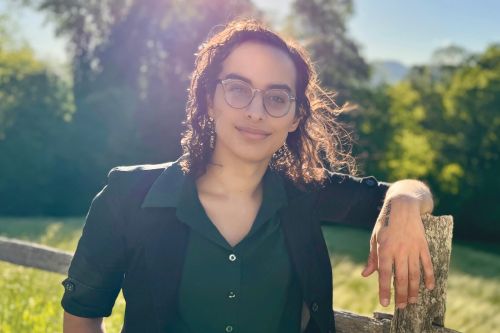
Born outside Philadelphia, Briarwood earned a bachelor’s degree in psychology from the University of South Carolina before continuing her education at Prescott College, where she studied adventure-based psychotherapy and adventure education. She has described that period as one marked by addiction and instability, followed by sobriety and a decision to rebuild through service.
Briarwood went on to serve as a crisis services manager with Appalachian Community Services’ Balsam Unit before becoming a case manager and victim service practitioner with Our Voice, supporting survivors of sexual violence and human trafficking.
Those roles required constant coordination with shelters, sheriffs’ offices, police agencies and district attorneys’ offices across Western North Carolina. Briarwood has said the work exposed structural gaps in both the criminal justice and public health systems, particularly when people are experiencing the worst moments of their lives.
More recently, Briarwood has worked in technical operations for Quality Data Systems, managing bank equipment across the region. The job has taken her throughout the district, including extensive travel after Hurricane Helene, when she visited communities such as Burnsville, Flat Rock, Hendersonville and Swannanoa, speaking directly with residents about damage, recovery and unmet needs.
She says that combination ultimately pushed her toward a congressional run, arguing that too many decisions affecting Western North Carolina are made without meaningful input from the people most affected. Briarwood’s critique of Edwards is similar to others — accountability and relying on friendly media outlets undermines public trust, particularly at a time when misinformation is widespread and often unchecked.
“Part of being an elected official is being accountable to your constituents. When we have media sources pitching softballs to elected officials and allowing them to get away with parroting just the standard talking points and rhetoric that they get from the Trump administration, it does a disservice to the voters,” Briarwood said. “It’s disingenuous and it’s disrespectful, quite honestly.”
Economic credibility also figures prominently in Briarwood’s campaign. She argues that Republican messaging has failed to match the reality facing working families dealing with child care costs, stagnant wages, unemployment, health care access and disaster recovery after Helene.
Rather than relying on talking points, Briarwood says her approach centers on face-to-face conversations and listening before proposing solutions. She has argued that representation begins with understanding how policy decisions land in real lives.
Briarwood has also floated the idea of a voluntary vote of no confidence, saying she would step aside if a majority of constituents concluded she was not fulfilling her responsibilities as a member of Congress. She framed the idea as a moral obligation tied to public service, rather than a legal mechanism, and said that if constituents thought it was best to leave the seat open — like Meadows did — then so be it.
Briarwood’s foreign policy responses were delivered succinctly. She expressed full support for Ukraine, rejected any rationale for U.S. control of Greenland and criticized actions in Venezuela that she characterized as unconstitutional and lacking congressional authorization. On Gaza, however, Briarwood was the only candidate to use explicit terms to describe what she believes is going on there.
“There is a genocide happening in Gaza, and we have half of our elected officials refusing to recognize that,” she said.
When asked to identify anything she thinks Edwards got right, Briarwood cited only the Carolina Cruiser concept, noting that even that example remained flawed in practice.
Amid the controversy over the supposed “anointed one,” Briarwood was most frank in her assessment.
“Look, if you want someone who’s going to toe a party line, you have that candidate right there and ready for you,” Briarwood said. “But if you want someone that actually represents change, that is not going to sit and abide by the status quo, that actually wants to do the job, be held accountable and show up for the people and represent the people, I’m your gal.”
When asked which candidate she meant, Briarwood declined to name one directly.
“I’m going to leave that up to interpretation,” she said.
Looking ahead, Briarwood said that at the end of her first term in Congress, she’d like to be remembered for genuine representation of Western North Carolina’s working class and for consistency between values and actions.
If unsuccessful in the primary, Briarwood said she would vote for the Democratic nominee, while acknowledging uncertainty about what additional support might look like beyond that commitment.
Jamie Ager
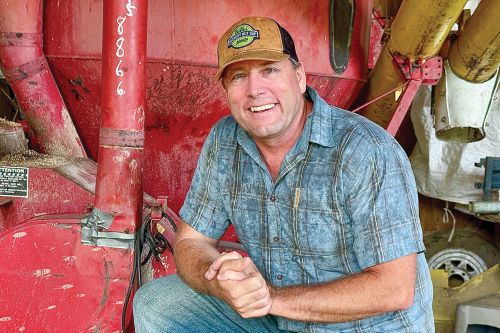
Ager says he has been shaped by a long family history of public service, but he sees his run as a personal decision rather than an inherited one. Politics was and is a constant presence in the Ager family, with relatives who serve or served in state government and in Congress — experiences he says exposed him to public service and civic responsibility.
Outside politics, Ager’s professional identity is rooted in agriculture. He earned a degree in environmental studies and sustainable agriculture from Warren Wilson College, a background that guided his return to the family farm in the early 2000s with his wife. Together, they built a pasture-based farming operation supplying meats to local restaurants and cooperatives.
Today, the farm encompasses roughly 250 acres of family-owned and leased land and employs about 25 people raising beef cattle, chickens, turkeys and pigs using pasture-based, hormone-free practices, with rotational grazing intended to support soil health and long-term sustainability. Ager presents that work as practical preparation for representing Western North Carolina’s rural economy.
Concerns about favoritism and internal party dynamics have dogged Ager, following controversy over the gala dispute and paid speaking slots.
Ager rejected the notion that any candidate has been anointed or insulated from scrutiny, pointing instead to the volume of forums and public events he has attended. He said the situation was addressed when concerns were raised and emphasized that no one has been excluded from participating in the race.
“I don’t feel like I have spent any time dismissing the other candidates,” Ager said. “I’ve done tons of forums, all this other activity — one thing I would prefer is direct communication, because I feel like a lot of this communication is sort of like almost with the intention of creating a sensational story.”
Edwards’ accountability and access are also under scrutiny; his limited engagement with media outlets that ask tough questions has frustrated many, including Ager, who defined leadership as an exercise in presence and vulnerability and argued that avoiding difficult conversations undermines trust.
“Part of leadership is leaning in and not leaning away from tough conversations,” said Ager. “If you’re scared to show up in the community, that might tell you something about what’s going on in the community.”
Discussion then turned to Edwards’ mobile office, and how Ager would engage constituents across a geographically vast district. Ager said the concept itself has value but stressed that physical presence matters more than symbolism.
He described constituent services as central to the role and argued that staffing and location decisions should prioritize proximity and accessibility. Ager also contrasted the administrative side of campaigning with the time he spends traveling the district.
“The worst part about the job is fundraising and phone time,” Ager said. “The best part is going out into the community and just hearing people’s stories.”
Recounting time spent in Swannanoa listening to residents describe their hurricane recovery experience, Ager said the act of listening itself carried value. Ager framed trust as fragile and cumulative, built slowly and easily lost.
“Part of leadership is earning trust,” he said. “You can only put a penny a day in the trust jar, but one episode can blast all that trust away.”
On foreign policy, Ager expressed support for Ukraine and said U.S. leverage should be used to restrain unacceptable conduct in Gaza. He dismissed suggestions of U.S. control over Greenland and after lauding the efficacy of the military personnel engaged in the removal of Venezuelan President Nicolás Maduro, urged humility regarding intervention in Venezuela, cautioning against overestimating America’s ability to reshape complex political landscapes.
Turning to Edwards’ record, Ager was indeed able to identify instances where Edwards could tout accomplishments.
“I think he got it right when he ran for Congress against Madison Cawthorn,” he said.
He also cited Edwards’ early efforts to build a constituent services operation, though he noted staff turnover has weakened that function.
Looking ahead, Ager was asked what he’d want to be known for after his first term in Congress, if he gets there. He emphasized disaster recovery, rebuilding trust in government and tackling health care through bipartisan solutions.
“I want to be remembered as someone who advocated for the people of Western North Carolina above partisanship,” Ager said.
Finally, Ager addressed whether he would support the nominee if he lost the Primary.
“Yeah,” he said, adding that he respects the field and believes his experience and relationships position him to earn trust quickly and win the General Election.
“We have a terrific slate of candidates,” said Ager. “I think I have the business experience, the winnability and the relationships to go win this thing and beat Chuck Edwards.”
On Feb. 10, The Smoky Mountain News hosted an in-person forum in Waynesville with all five congressional candidates, where a completely different set of questions was presented. Watch it before you vote by visiting SMN Facebook page. .