Version of the story was published in The Sylva Herald, March 12 edition
After learning that projected construction costs are nearly double the amount allocated, the Jackson County Board of Education is reassessing its planned construction projects and prioritizing essential student needs.
At its monthly meeting on Feb. 24 the board discussed these updated projects after its joint meeting with the Jackson County Board of Commissioners on Jan. 22. During the Board of Education meeting, Jackson County Public Schools Superintendent Dana Ayers and Board Chair Wes Jamison said the commissioners indicated they do plan to allocate additional funding.
The noticeable differences between the money allocated and projected costs for the projects is due to the fact that originally the projects presented were general concepts, according to Deputy Superintendent Jacob Buchanan.
“The county had allocated a certain amount for the projects. And that, of course, was before when they were just a desire or a dream,” said Board of Education member Gayle Woody, in a follow up interview. “The issue is you aren’t sure how much you need when you start.”
During the boards Tuesday meeting, members reviewed the proposed renovations and focused on what are needs in the projects and what are wants that can be delayed.
“We went through each of the projects, said this is, in our view, a real need. And maybe, that’s a want. So go ahead and put that in phase two,” Woody said.
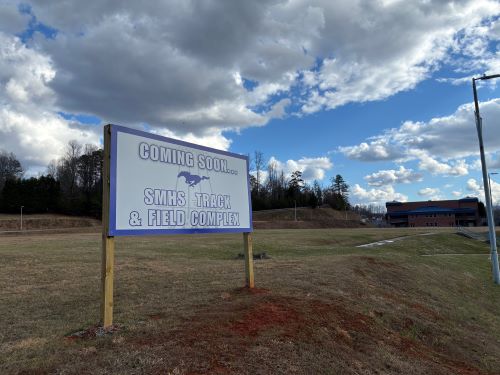
Smoky Mountain High School’s renovations asked for an eight-lane track, as well as restrooms and a concession building. The board recognized that it would cost less if the county built the restrooms and there are already restrooms in the gymnasium.
“So, we’re not saying, oh too bad, there’s not going to be any facilities. We’re just saying you’re going to have to walk a little farther,” Woody said.
The board is moving forward on construction of the eight-lane track, with the groundbreaking ceremony having taken place Feb. 9 and construction expected soon.
The track renovations have been in discussion for over 20 years, according to Woody. With these renovations SMHS will have a regulation track and be able to host a track meet, which they have not been able to do.
“My children graduated in 1995-2000,” Woody said. “They were on the track team. We never had a home track meet.”
The board also recommended renovating the bus garage, with an estimated cost of $5 million, be moved to phase two, saying it does not directly affect the students.
The commissioners agreed to continue with renovations for Fairview Elementary School, but without the stage in the cafeteria. With these changes the renovations will be an upgraded kitchen and cafeteria. Woody said the current cafeteria cannot hold the number of students, and students with limited accessibility must use an outdoor ramp to access the space.
“This was not just, oh, we want this new cafeteria,” Woody said. “This was a real need.”
One of the largest construction projects is Blue Ridge School and Early College, with projected costs over twice as much as was previously allocated. According to Woody, the gym at Blue Ridge is undersized and poses safety concerns, with bleachers coming up to the edge of the court. The cafeteria’s kitchen and serving line are currently located in a hallway.
“That was a definite need,” Woody said. “So, we really did ask for that.”
During the Feb. 24 meeting discussion of Blue Ridge became tense. Board member Lynn Dillard argued anytime the board gets an allocation SMHS gets something big, but Blue Ridge gets nothing.
“Blue Ridge School is out there in the sticks with no attention. It’s filthy dirty,” Dillard said during the meeting.
Woody emphasized that when discussing needs versus wants, the board focuses on safety and accessibility for the students.
“The needs of students has changed,” Woody said. “We need to make sure that we’re meeting all the kids’ needs and that we’re also making sure that they feel safe and secure so they can learn.”
In NC, the county owns the school property and the state funds teacher’s salaries, supplies and other expenses related to instruction. Since the county does own the property, the county commissioners determine how much money is allocated to each project, and has the final say in these school renovations.
“There’s only so much money,” Woody said. “There is always more wants and needs than there are resources.”
At this time, there is no follow up joint meeting with the county commissioners scheduled.