A version of the story was published in The Sylva Herald, April 1 edition
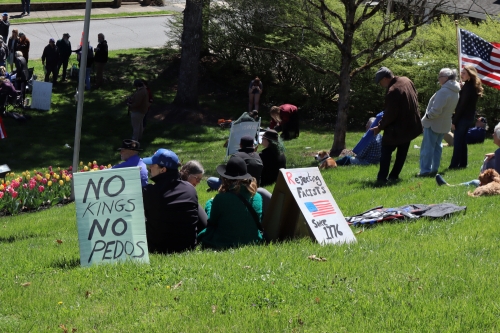
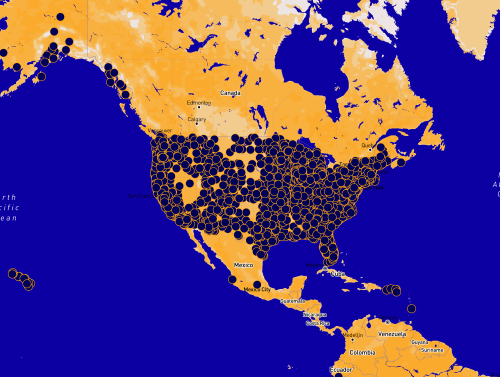
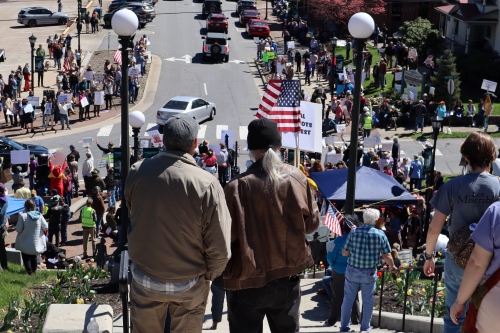
Over 700 protesters filled downtown Sylva near the Jackson County Historic Courthouse for the third “No Kings” protest on Saturday, March 28. This protest was one of 3.100 organized across the country bringing over eight million people in a single protests across all 50 states making it the largest single-day demonstration in U.S. history.
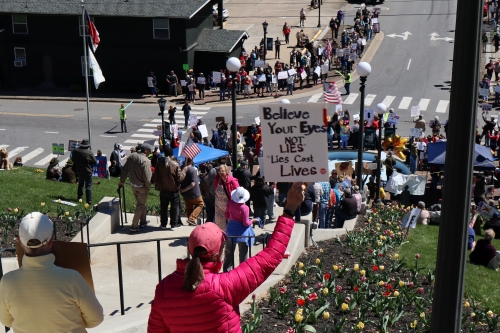
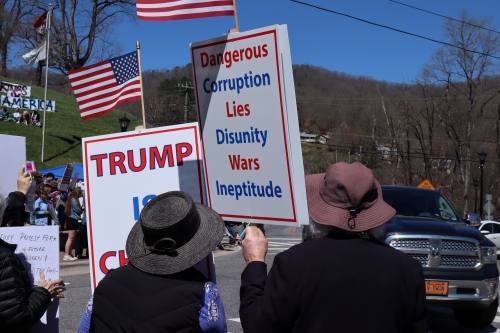
No Kings is a nationwide protest movement with one core idea – The U.S. will not accept kings as rulers. On Saturday people in Sylva were out protesting against immigration enforcement, possibilities of war and too much government power.
Speakers at the event include Adam Tebrugge, Selma Sparks, Penny O’Neal, Tom Baker, Jay Denton, John Hererra, Nilofer Couture and Lauren Baxley.
Couture, one of the lead organizers of the protest with Jackson County’s branch of Indivisible, introduced speakers as well as gave a speech of her own. During her speech, Couture emphasized unity.
“This moment is not about red vs. blue. Or conservative vs. Progressive. It’s about Democracy vs. Authoritarianism. People vs, unchecked power. They want you to feel alone, isolated and powerless. But look around you,” said Couture.
John Hererra, the son of two immigrants and a former candidate for the Jackson County Board of Commissioners for District One, emphasized immigration enforcement issues.
“A government agency has been tasked with removing our friends, our neighbors and our families. We are not outraged enough,” Hererra said. “(President Trump’s) executive orders do not move us. We move as we please. His laws are made to hurt, to restrain, to remind us he rules.”
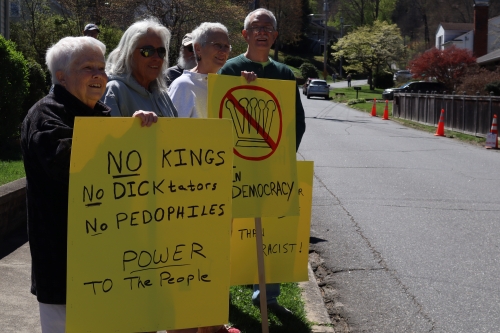
Tom Baker, a Vietnam veteran, referenced the My Lai Massacre in Vietnam as he reminded everyone that sometimes you must disobey orders.
“It’s one of those terrible things when you have people that will have bad orders and you owe it to the country and your fellow soldiers to disobey illegal orders,” said Baker. “We want no more war. We definitely don’t want any kind of king. So we’ve got to get out and vote. We’ve got to keep standing up for each other.”
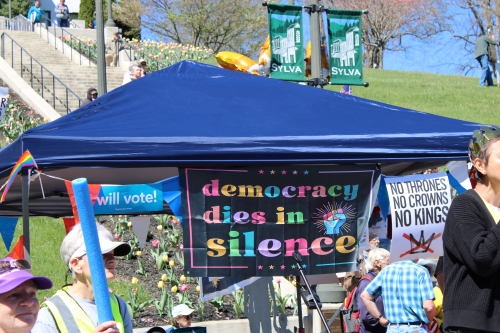
First time attendee at the No Kings protest and a WCU student, Spencer Davis, said he was surprised by the turnout.
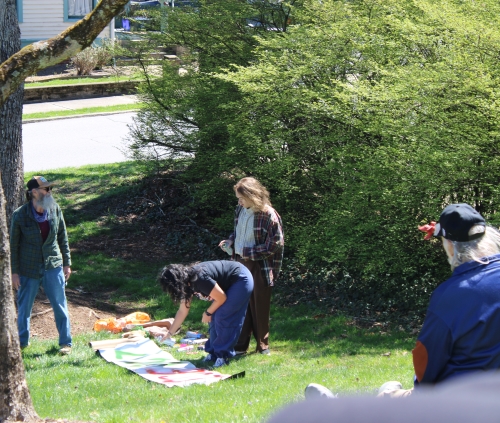
“(There is) a lot more people than I thought would be involved, and I think that’s a good thing because everyone should get involved somehow,” said Davis. “We have a good mix of the youth vote and the the people who have been here long.”
Outside of protesting, Davis works with a nonprofit at WCU and helps people register to vote, educates them on politicians running and what they stand for and helped to inform students at WCU when the polling site had been removed.
For WCU student Judith Cruz, it was her first time at the protest as well. She said she came out because the state of the country scares her, especially recent ICE raids and immigration bills passed because she is Hispanic herself.
“It brings a lot of hope seeing all these people, especially in a small, rural town,” said Cruz, adding that she tries to be politically active outside of this protest. “I vote, and I try to stay as informed as I can.”
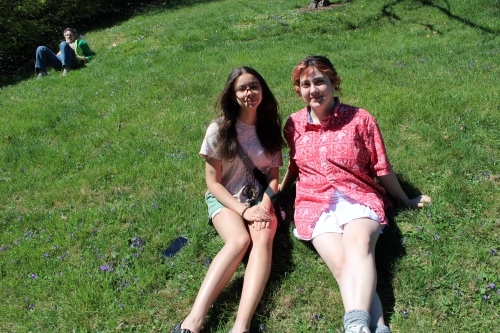
Susannah Hinz, a Junior English and History major at WCU, went to the first No Kings protest. She believes the protests are a good way to show out and experience community, as well as find local resources.
“Reach out in the local community and see what you can do to help with local issues,” Hinz urged other protesters. “A good place to start is in your community.”
Political science and international studies major Jaryn Green said she belies the protests have raised awareness and serves as a great way to get involved in the local political community.
“Public perception of what a protester is has changed a lot,” said Green. “It’s really a very chill environment.”
Green also said that she was interested in the rhetoric at the protest especially because she believes the Democrat Party usually fails at organizing.
“It’s so much of a looser coalition than the Republicans are when you look at it from a political science standpoint. Nobody can agree what we’re talking about,” said Green. “You have women’s rights, trans rights, gay rights, immigrant rights, anti-Trump, anti-ICE, and trying to get all that into one protest can make it really confusing because I think there’s this concept that everyone has to agree on all of those and I don’t think that’s true.”
A member of WCU’s Revolutionary Book Club and a political science and sociology major, Seth Blumenfeld, echoed criticisms that the No Kings protests are not doing enough.
“Things have gotten worse,” said Blumenfeld. “At this point, I’m really starting to think that we are going to need some sort of action other than protests every four months to turn things around.”
Blumenfeld argues the protests need to advocate for specific demands and highlight local groups and organizers that protesters can join. He also suggests protesters should find local volunteer organizations to join if they want to get involved.
“Get involved in politics. Start going regularly. Meet with people and discuss politics. Educate yourself and educate your neighbors and continue to be involved other than just coming out every few months,” Blumenfeld said. “This is the starting point.”
“No ICE, no war, no kings,” and “show me what democracy looks like,” were two chants that echoed around the fountain at the No Kings protest in downtown Sylva:
Although the next No Kings protest has not been scheduled yet for 2027, there are a variety of events planned within the next few months:
- Mass Call virtual event involving national speakers and local activists celebrating the 2026 No Kings protest on Mar. 31 at 8 p.m. EDT.
- “Eyes on ICE: Train the trainer – Immigrants’ Rights” virtual event training on exercising personal rights and how to do so safely on April 20 from 8 to 9 p.m.