Chances are if you drive you’ve noticed increasing prices at gas stations. But why is that?
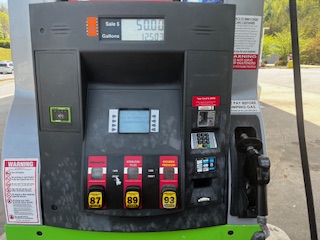
An AP-NORC poll done in March showed that 45% of people surveyed are extremely or very concerned about being able to afford gas, compared to 30% in the same survey from 2024.
The national average retail price for regular gas crossed $4 per gallon for the first time since Ukraine was invaded in 2022. During that, gas prices hit a record average of $5 per gallon.
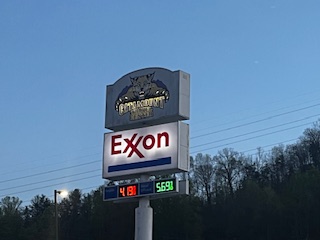
For NC, the average price for regular gas as of April 10 is $3.93 per gallon, a bit lower than other states, but people are still feeling it. In Asheville, the current average is $3.95 per gallon.
The above chart represents the weekly prices of regular gas from Jan-April. All data is sourced from the Energy Information Administration. The U.S. and Israel launched their attacks on Iran Feb. 28.
A professor of economics at WCU, Edward Lopez, emphasized supply and demand and recent strikes on oil-producing facilities as key factors for the rise in gas prices.
“It’s both supply going down which increases prices on its own,” he said, referring to the disruption as a negative shock to the economy. “Combined with demand going up because people expect the prices to be high tomorrow.”
Lopez compared this to the 1973 oil shock which also occurred due to geopolitical conflict in the Middle East and hit the economy hard.
“It took a long time for the economy to unwind from that,” Lopez said.
While the supply of oil globally is being halted, people’s demand for gas is staying the same, if not increasing.
According to an Associated Press article, the price for gas usually does increase a bit during this time of year, with people traveling more for spring break and the shift from winter blend fuel to summer blend fuel, which is more expensive to produce.
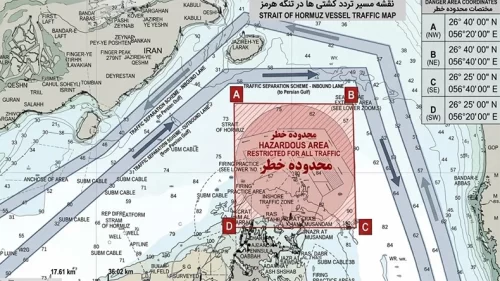
Lopez also talked about strikes on and around Iran as a contributing factor, especially since Iran has closed off the Strait of Hormuz.
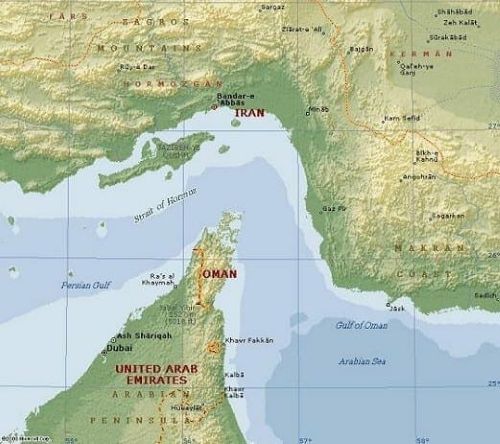
The Strait of Hormuz is a narrow strip of water that connects the Persian Gulf to the rest of the world’s oceans, that typically 20% of the global oil supply goes through. Strikes on Iran have effectively closed off the strip, as Iran retaliated by attacking merchant ships in the Strait. This has caused one of the largest supply disruptions in the global oil market. According to the International Energy Agency’s March Oil Market Report, 20 million barrels per day of oil traveled through the Strait of Hormuz before the war. This number has been cut by at least 10 million barrels per day.
Daniel Abankwa, a political science professor at WCU who specializes in international political economy, says from an international politics perspective Iran is taking advantage of the Strait of Hormuz’s importance.
“This is a classic case of a geopolitical chokepoint being weaponized by Iran,” Abankwa said.
The AP-NORC poll showed that 67% of people think preventing U.S. oil and gas prices from rising is an extremely or very important goal of U.S. foreign policy and 65% think preventing Iran from obtaining a nuclear weapon is extremely or very important.
So, what can consumers expect to see next?
If the war in Iran ends sooner, than the disruptions of supply will end sooner, and the prices of oil and gas will come down sooner.
On April 7, the U.S. and Iran announced a two-week truce which included the re-opening of the Strait of Hormuz. Part of the ceasefire says Tehran will assume control over the strait. President Trump posted on his Truth Social account that the Strait of Hormuz would be “OPEN & SAFE” and that if there is no agreement “the ‘shooting starts,’ bigger and better and stronger than anyone has ever seen before.”
However, hours after the ceasefire was announced Israel attacked Lebanon, and Iran announced they would be closing the Strait again. Pakistan, the mediator of the U.S. and Iran truce, said Lebanon was included in the agreement. Prime Minister of Israel, Benjamin Netanyahu, said the truce did not include Lebanon and that Israel would continue “to hit Hezbollah.”
After negotiations between Iran and the U.S. fell through on Saturday, April 11, Trump said he would begin a full blockade on the Strait of Hormuz to stop ships from entering or leaving.
According to Michael Lynch, a distinguished fellow at Energy Policy Research Foundation, the threatened blockade could boost oil prices up to $10.
Trump reiterated his previous threats against Iran on Sunday, saying the U.S. would strike Iran’s civilian infrastructure if it doesn’t give up its nuclear program.
“I could take out Iran in one day,” Trump said in a Fox News interview on Sunday. “They’ll never be able to rebuild it.”
“If (the war) goes another month, another five weeks, people are going to have to start trimming elsewhere,” Lopez said on April 2. “That will have adverse effects on the economy as a whole.”