It’s time for the 42nd annual Tuck River clean-up. The Tuck River cleanup 2026 is scheduled for Saturday, April 18. The registration starts from 9 a.m. in front of the Catafount (transportation will be provided). Due to a limited amount of gear, registration will be limited to about 500 volunteers.
There are alternative walking routes for those not meeting the requirements to raft the river or anyone who would prefer not to be on the river. Walkers can register between 10:00 a.m. and 11:00 a.m. Walkers should wear comfortable shoes and clothing that they don’t mind getting dirty. The number of walking volunteers will be capped at 30 due to the amount of available transportation. Also, the first 500 volunteers for the Tuck River cleanup will receive a free Tuck River T-shirt.
When rafting, each volunteer is required to wear a personal flotation device that will be provided by Base Camp Cullowhee. Each volunteer is required to wear shoes that won’t come off in water, so flip flops and Crocs are not permitted. Base Camp Cullowhee also prohibits picking up any sharp objects or needles to discard, and lifting anything heavier than you are capable of carrying. All volunteers will also be required to follow all safety protocols while hiking, visiting the waterfalls, or paddling.
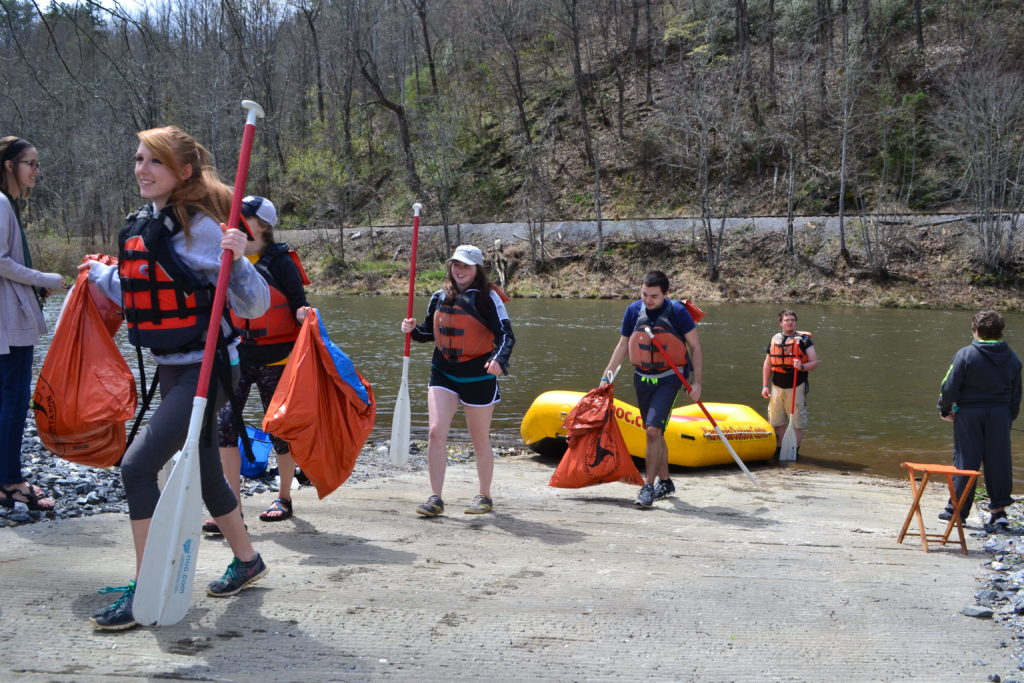
Organized by Base Camp Cullowhee, the event started with a few members of the program staff, faculty and friends just getting together to clean up the river before it expanded into one of the nation’s largest single-day river cleanups. Hundreds of volunteers come together to clean 15 miles of the Tuckasegee river from Cullowhee to Whittier, NC.
“People will get there in line as early as like six or seven a.m., and then we take them from the Western campus to Dillsboro River Company and they’ll go on the river,” said Berhinger-Smith, Assistant Director of Outdoor Programs for WCU and coordinator for the event for The Sylva Herald. “Some rafts will be self-guided, some will have guides and then they’ll spend two, sometimes three hours on the river and then we’ll bring them in shuttle vans and buses back to campus.”
The Tuckasegee River’s name is derived from the Cherokee word “daksiyi”, meaning ‘turtle place’. But this oasis of wildlife and natural habitats is under threat from multiple forms of pollution like low pH levels from power plants and high levels of mercury due to industrial runoff. The most noticeable of these pollutants is the increasing rates of garbage and waste that continue to contaminate the Tuck River and threaten the diversity of wildlife in the area.
And they pick up a lot of trash.
“We’re picking up trash and we do metal recycling, so people pick up anything like tires, car parts, a lot of our metal comes from car parts and miscellaneous trash like cans, a lot of cans, inner tubes that have popped and found their way on the side of the river, so really it’s anything that the participants feel comfortable getting,” Behringer-Smith said.
In 2023, over 405 volunteers joined the effort and over 2500 pounds of garbage were collected from the river, 500 pounds more than the previous year.
After Hurricane Helene devastated the greater Jackson County area in Sylva, Cullowhee, Webster, Macon, and Swain counties held their own debris removal operation in response to Hurricane Helene’s impact on the Little Tennessee and Cullasaja rivers.
See more information and the rules of what to wear and what not to do on the river.