A version of the story was published in the Sylva Herald, April 15 edition
Working parents don’t have it easy in North Carolina. The state has lost childcare facilities and parents are forced to either bring them to their workplace or work with the employers for accommodations.
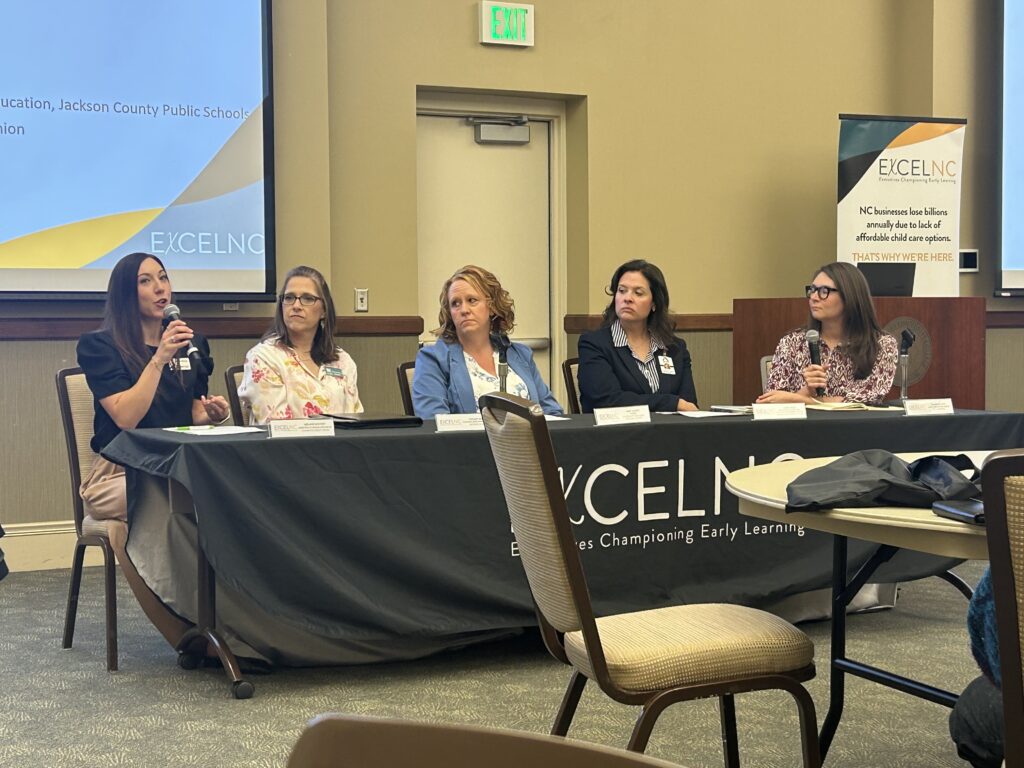
The economic impact of the childcare crisis and some solutions were covered during the NC Child Care Economic Summit on April 9. The event was organized by the Southwestern Commission Council of Governments and Executives Championing Early Learning in North Carolina (ExCEL), with Southwestern Community College hosting the event.
The childcare crisis in Western North Carolina is nothing new and continues to have a rising negative economic impact on the region. According to the presentation by ExCEL, the problem costs the Southwestern Commission region $46.5 million per year, with $35.8 million coming from lost business activity.
(ExCEL) is a business initiative of NC Child dedicated to uplifting childcare as an important economic element. ExCEL is turning to organizations and business leaders implementing strategies to help this crisis that affects everyone involved.
This summit was held for an audience of employers, representatives of economic chambers and community leaders to encourage them to get involved in remedying the childcare and workforce crisis.
The ExCEL presentation was shared by Senior Director of Policy and Research, Neil Harrington, and the Director of Early Childhood Education Policy and Research from N.C. Child, Dr. Leanna Martin, shared results from their research on the crisis and ideal solutions.
Across North Carolina, there has been a pattern of workforce struggles with positions not being filled, employment disruptions and constant last-minute problems presented by the childcare crisis.
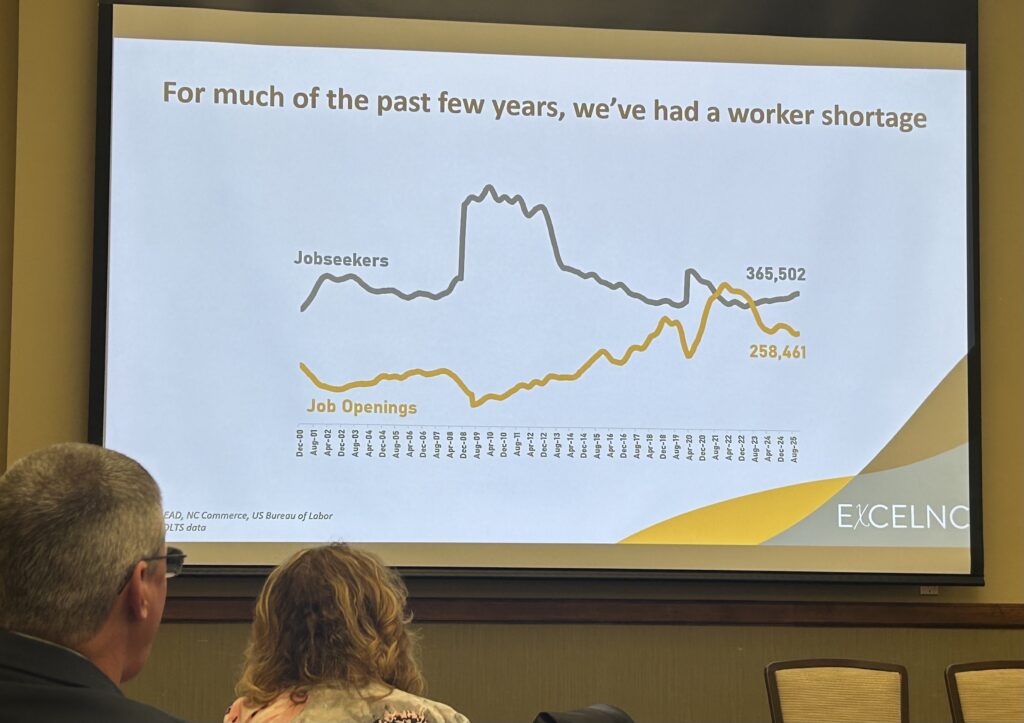
Since the Covid-19 pandemic, childcare centers have been trending on a downhill slope. Centers are being shut down, and employee wages are not being raised with the average cost of living. Harrington also shared a graph demonstrating the worker shortage, especially pronounced from 2021 to 2023 when the job openings outnumbered the job seekers.
The negative impact on the local economy is the highest in Haywood County. Childcare issues cost the county nearly $16 million annually, with $12.5 million coming from lost business activity, and the rest from lost state and local tax revenues, stated in the summit handouts.
Cherokee Indian Hospital Authority Chief Executive Officer Casey Cooper provided an example of how this childcare crisis is affecting healthcare.
“We surveyed our staff last year to try to figure out what we can do to help support our workforce, and 220 of our staff responded to the survey, with one in four of them expressing childcare issues,” Cooper said.
When the school buses come around to drop off employee’s children, they spread out around the hospital, despite the policy that doesn’t allow children in the workplace,” he said.
“The most common responses we heard were, “I have no other choice.” There’s nowhere else for them to go, and it’s the only way I can keep working,’” Cooper said.
Cooper closed his speech with possible solutions emphasizing how policymakers have to invest in early care and education to stabilize childcare prices. He emphasized the need to reduce teacher turnover by supporting the daycare workforce and improve access for families to strengthen the economy.
District 50 Senator Kevin Corbin (R-Macon) also spoke about the impact of the problem.
“Since 2020, North Carolina has lost about 200 licensed healthcare programs,” Corbin said. “That means fewer options, longer waitlists, and more families without solutions.”
Corbin has been working with senators Jim Burgin from Harlem County and Thomas McInnis from Cumberland and Moore counties to ask for $75 million to come from sports betting and be put towards childcare. They will be submitting this bill in about two weeks.
He plans to file legislation to reduce regulations and make childcare more accessible. He used the example of attempting to add daycare at a children’s school, and how that faces an overwhelming number of federal regulations that nearly prevent it from happening.
He added that there are an estimated 500,000 to 600,000 children under the age of five in North Carolina and, of that group, about 283,000 are in unlicensed childcare facilities. This means they are under the watch of family, friends, neighbors or whoever the parents can get help from.
Corbin wants to lower the regulation to move more children out of unlicensed care and into that of a professional. One way to do this is through opening up more daycare centers. He believes a promising solution would be to add these at more community colleges. Currently only 14 out of the 58 community colleges in North Carolina have childcare options.
Martin proposed a statewide subsidy floor that will provide immediate help. It would show an increase in reimbursement and incentives for new providers to come into the workforce.
“It would create nearly 3,200 jobs, 2,500 of which would be in childcare, and it would increase personal income by $128 million,” Martin said. “It would also stabilize the programs that are here now by increasing revenue and increasing childcare work compensation.”
Another solution Martin proposed was supporting the teachers and employees who work in childcare centers by covering the costs if they also need childcare for their own children. Providers have weighed in saying programs like this would result in filling more job positions, opening more daycare centers and building the economy.
The summit concluded with a panel of experts discussing what they have done to relieve this crisis.
Director of Human Services from Champion Credit Union Melanie Mooney said they have been adjusting their work schedule to allocate for school drop-off and pick-up times for their employees tailored to their schedules.
“So just trying to be empathetic to the employees and managing operations and running a business with a workforce that’s high quality,” Mooney said.
Jackson County Economic Development Director Tiffany Henry shared how the county has recently purchased two childcare centers with the hope of creating more space and accommodation for the community.