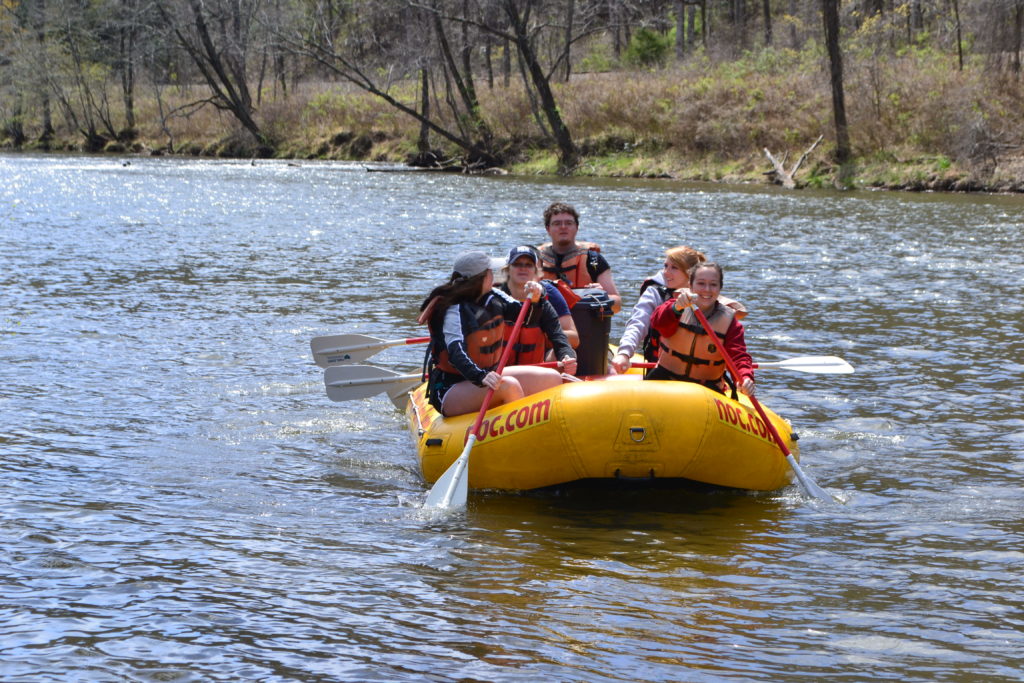
The 42nd annual Tuckasegee River cleanup was a success. 592 volunteers picked up around 5,000 pounds of trash from our beloved river and at the same time had fun on the boats and on the ground.
Last year’s record of over 7,549 pounds of trash is undefeated because of Hurricane Helene. This year’s Tuck River cleanup still surpasses the average number of trash collected for the program per year at around 3,500 pounds.
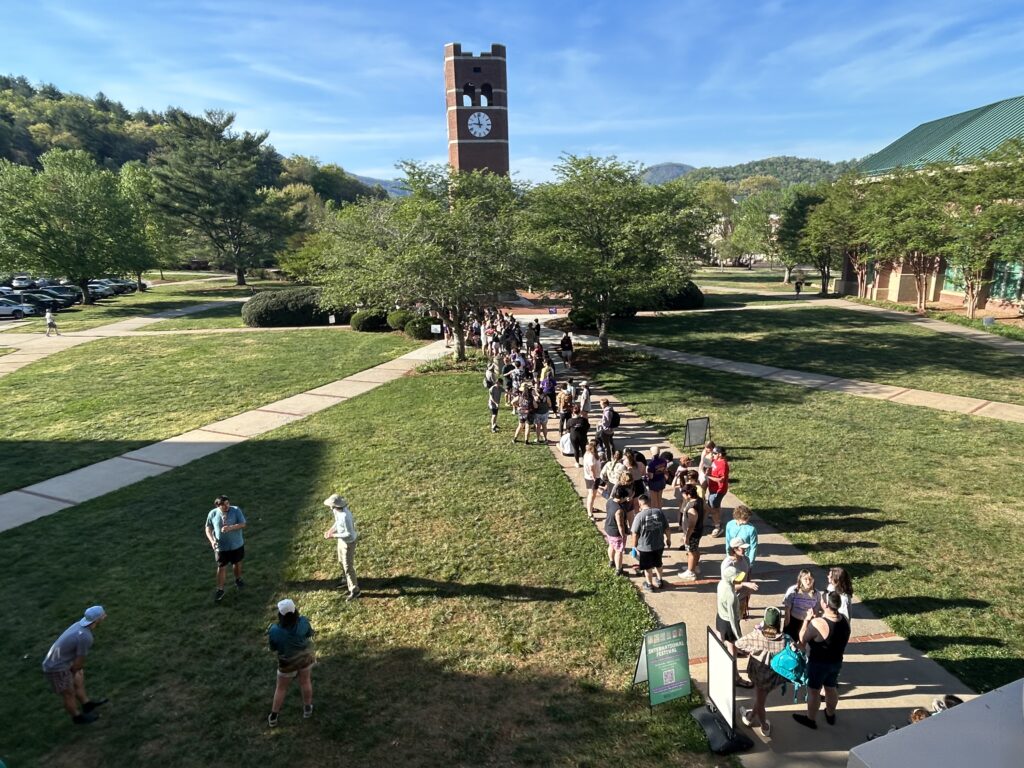
The volunteers, which included several Catamount Dining staff, more than 60 staff members from WCU’s Base Camp Cullowhee and WCU’s Outdoor Program, along with dozens of volunteer shuttle drivers and raft guides, gathered around the Catafount on April 18 at 9 a.m. The line for registration stretched from the center of the Catafount all the way down to the doors of the Coulter building.
Assistant Director of Outdoor Programs Claudia Behringer-Smith reflected on the turnout of the event compared to last year’s cleanup.
“Last year, we had a 500-volunteer limit, so we only ordered around 500 shirts. The issue arose when there weren’t enough shirts to go around,” Behringer-Smith said. “This year, however, we ordered close to 600 shirts to address the issue, which was fortunate since we got an even bigger turnout this year.” Behringer-Smith hopes to order even more than 600 shirts for next year’s cleanup.
Behringer-Smith also highlighted how much visual impact the Tuck River cleanup has on the river, making it a more hospitable environment for the wildlife.
Check out the video story of WCU students having fun cleaning up the Tuck.
“I think there’s a huge visual difference. People are coming out of the river with tires, car parts, pieces of fencing. These items are a visual eyesore that can affect the wellbeing and sustainability of the Tuck.”
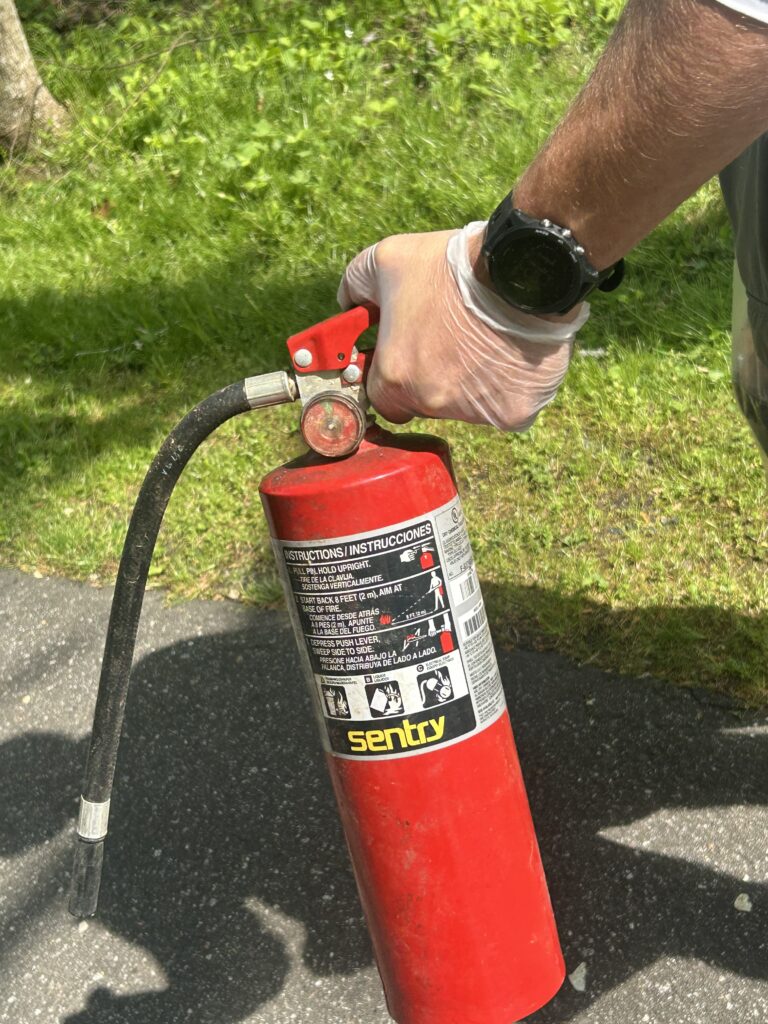
Both in the Tuck River cleanup itself and the cleaning of the Greenway for those who chose to walk this year, the abundance of unusual items was highlighted more this year, like fire extinguishers, dumpster lids, car frames, windows, dolls, Cookout trays, even scrap metal and car parts.
Although Base Camp Cullowhee doesn’t keep track of students vs. members of the community, Behringer-Smith estimated about one-third to two-thirds of participants on average are students.
Behringer-Smith’s job wasn’t just supporting staff, refining staff training, or conducting logistical research for outdoor events. Her job also involves securing and working with donors to support the cleanup.
“I think usually we work with the Nantahala Outdoor Center and Wild Water. They provide all of the rafts, all of the paddles, all of the flotation devices, and we have more donors; but those are the two that provide all of that gear.”
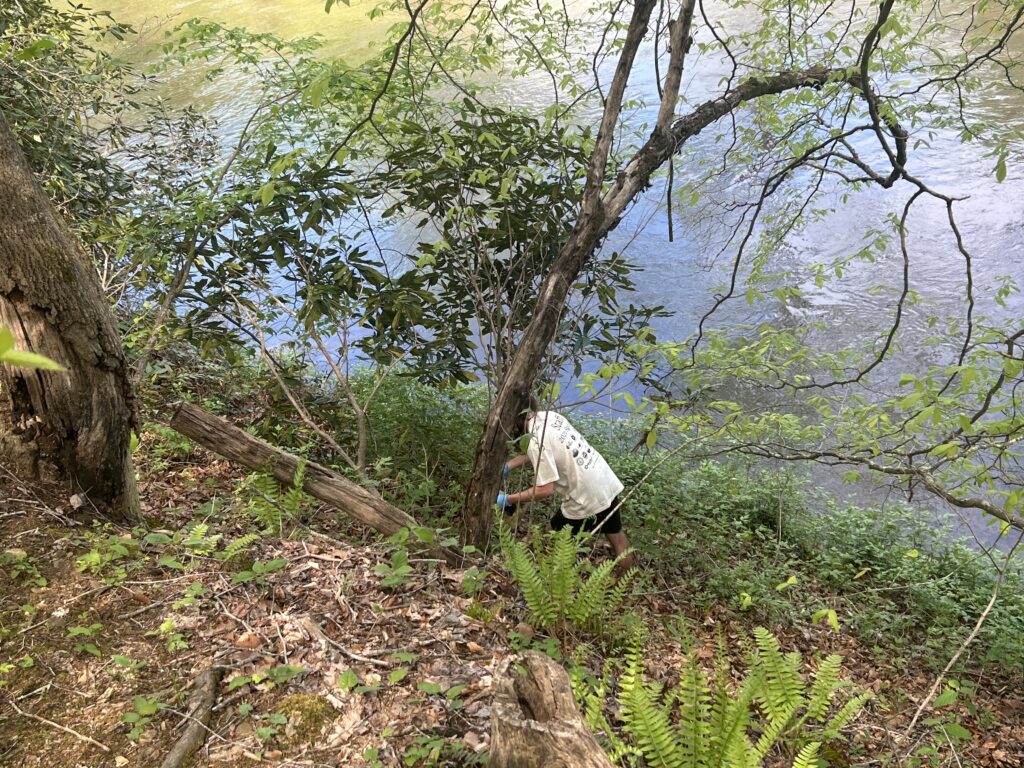
But the Tuck River cleanup wasn’t the only environmental cleanup held by Base Camp Cullowhee that day. For people who wanted to participate but felt uncomfortable rafting, there was a walking option for cleaning up the Greenway trail.
“When we were told not to pick up any sharp objects, I winced when I saw chipped beer bottles and broken glass. We still picked up way more trash than I thought we could,” volunteer Will Shaefer said.
Outdoor Recreation Manager with Jackson County Parks and Recreation, Trevor Brown commented on the amount of garbage the team picked up. “They had a ton of trash last year because of Helene. But everyone here went out of their way to pick up everything, so it’s honestly about the same amount if not more,” Brown said.
“We also have a public works department that cleans up the Greenway every year before the Tuck River cleanup, so these volunteers really have to scrounge to get more trash.”
If you want to participate in more events like this, there are cleanups and programs that you can get involved with locally, along with future events you can plan for now, like the Spring Litter Sweep, the Household Hazardous Waste Collection Event, and the Jackson County Recycling Partnership.