People fleeing from their homes in Georgia because a wildfire is within sight-distance is now a reality. No rain for a month, wind and low humidity can take a cigarette thrown from a car window and turn it into a raging inferno devouring everything in its path. It’s more evidence that the warming planet is fighting back.
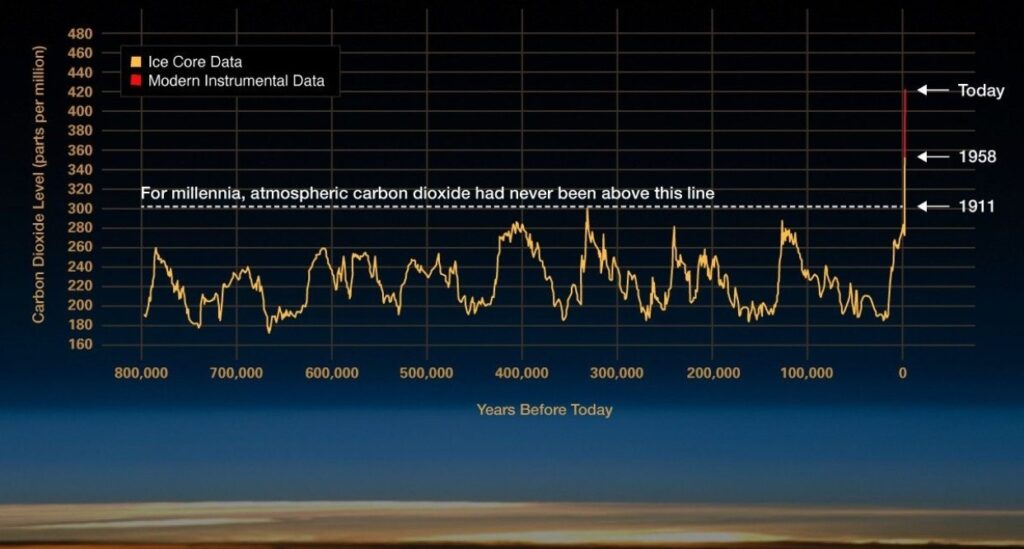
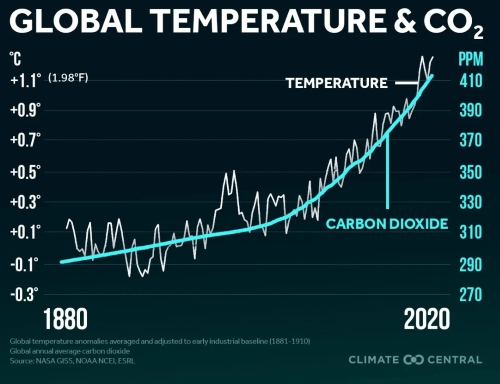
Climate change is nothing new. The thing that is changing rapidly and dramatically is the level of carbon dioxide. According to climate.nasa.gov, the atmospheric samples taken from ice cores show a spike in carbon dioxide levels since 1911. Twentieth-century scientists Guy Callender and Gilbert Plass tied increases of carbon dioxide in the earth’s atmosphere to the warming of the planet and the impact of humanity.
“I think the amount of snowfall that we used to get here definitely has been on a downward trend,” said Eric Fanslau, captain of the Sylva Fire Department and formerly of the NC Forest Service. “I definitely think it’s warmer longer here now than in previous years.”
The impact of a warming trend can cause less rainfall and snowfall.
“Drought of course, such as the case presently, does make conditions much more favorable obviously for wildfires to start and spread,” said Robert Hawk, County Extension Director of Jackson and Swain County’s Natural Resources and Community & Economic Development Extension Centers. “We are currently in an “Extreme” drought classification in most of Jackson County. Droughts do impact agriculture like row crops, corn and livestock pastures.”
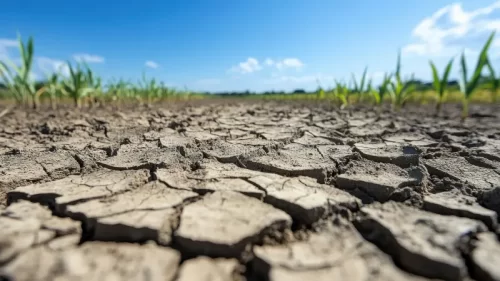
With drought and deforestation comes the risk of wildfires. According to the North Carolina Department of Agriculture & Consumer Services, there were 25 wildfires burning on private property and state-owned property in North Carolina on May 4, 2026 with 60 fires being active within the past 30 days.
“In terms of frequency of small fires…it’s a little more in the way of the amount of people that are still burning,” Fanslau said. “We have a lot of people that come from out of state that don’t necessarily understand burning laws and what’s capable here in the mountains.”
Less rain and hotter days and nights will bring drought, causing a drop in plant growth. With a severe drought, the reduced plant growth in our forests causes plants to die. If that happens several years in a row, insect populations and bacteria in the mountains and streams of Western North Carolina will increase, according to WNCVitalityIndex.org.
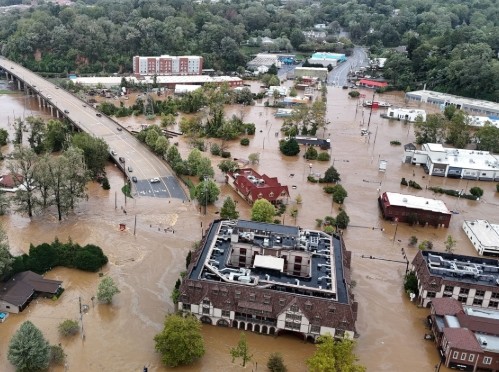
Hurricane Helene was an example of how climate change increased the amount of rain by 10%, causing the stalled cold front and heavy rain system in the area to combine with the moisture of the storm that wreaked havoc in our area.
Amphibian species sensitive to changes in environment and temperature are salamanders, particularly the Eastern Hellbender. The Eastern Hellbender has been a solid indicator of water quality. Post-storm sedimentation, such as what happened after Hurricane Helene, and other climate-driven rainfall extremes threatens the long-term survival of Eastern Hellbenders.
“Helene was a catastrophic flood and it moved boulders as big as cars… even hellbenders that were under those boulders would have been washed away. Anytime you have a really strong flood event… that’s hard for them to deal with,” said Joseph Pechmann, a professor in the biology department who specializes in conservation ecology of amphibians at WCU.

Amphibians in Western North Carolina are already showing measurable climate-driven shifts.
“We found that over time, the late winter and spring breeding amphibians were breeding earlier… and we attributed that to climate warming,” Pechmann said while explaining these phenomena.
Some of our mountain streams have shown the effects of a warming trend in WNC. The Redbreast Stonefish and Central Stonerollers have recently been seen in our local waters. The two species of fish are commonly found in the waters of the piedmont.
“A 20+ year-long study published in 2003 found that populations had declined 77% over the course of the research project,” said Jennifer Cooper, Executive Director of WATR-The Watershed Association of the Tuckasegee River. “In December of 2024, the US Fish and Wildlife Service proposed classifying the hellbender as endangered.”
The warming of this area is caused by things other than climate change, such as deforestation.
“Researchers have found that one of the biggest causes of stream warming is canopy removal—cutting down the trees that shade our creeks and rivers. There can be a ~9°C temperature difference in streams that have had the canopy removed versus those that haven’t, so planting or maintaining native trees and shrubs near your waterways is a great way to support healthy streams,” said Cooper.

“In a generally warming climate, the local effects of increasing shade on our streams can counteract warmer air temperatures. By requiring conservation easement properties to have shaded stream buffers and by planting trees along streams on Mainspring’s own properties, we’re adding shade and keeping water cool,” said Kelder Monar, the Stewardship Manager of Mainspring Conservation Trust.
Agencies such as Mainspring are working to remediate the land in the area through grants and private funding. They take on projects such as cleaning up old petroleum sites near the Little Tennessee Watershed and assisting with larger stream restoration projects. They offer educational opportunities for landowners in the area, helping them restore healthy streamside plants.