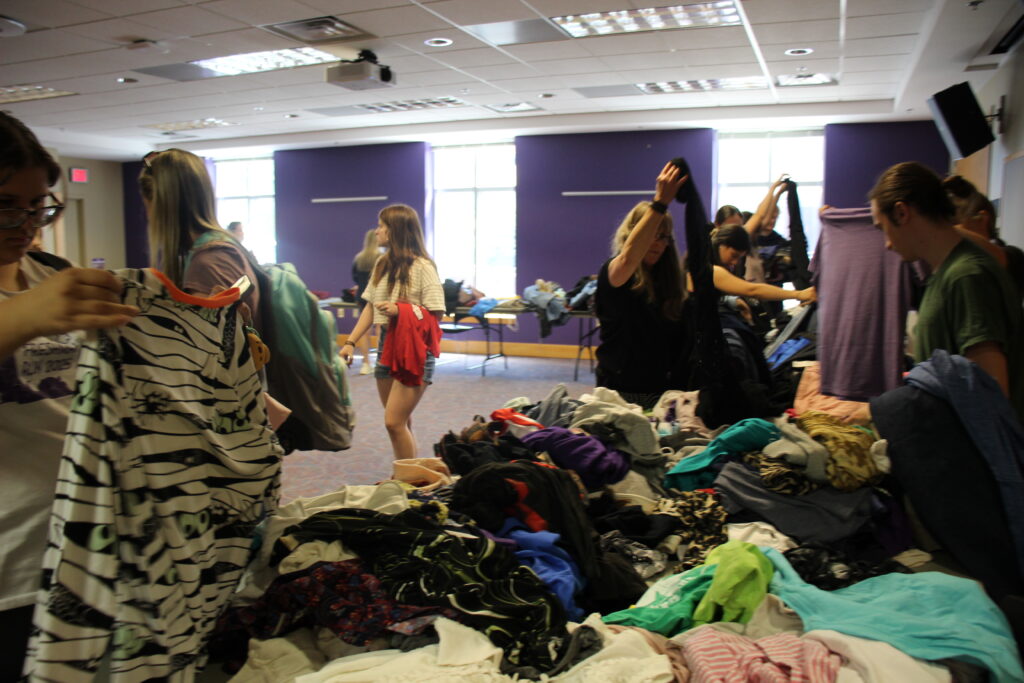
Students and community members were invited to the third annual Gift and Thrift event hosted by WCU’s Center for Community Engagement and Service Learning on Friday, May 1 at a pop-up shop in the University Center.
Over 30 students attended the event, clearing out the donated items quicker than they had been sorted.
The event was designed to promote reuse, affordability and community engagement by offering a variety of secondhand goods donated by students and community members.
Students were lined up out the doors before the event had begun, rushing into the room as the doors opened to be the first to find amazing thrifted find for their summer wardrobe.
“A thrift event at the end of the semester was a brilliant idea. I got to donate clothes I was tired of in exchange for some new ones to start fresh for summer,” said Melody Ballard, an environmental major at WCU.
Clothing, books and dorm essentials were available to students for free after a quick swipe of their student IDs. The clothing was organized by volunteers by size and style for those looking for specific looks at the event.
Before the pop-up store event, students were given the opportunity to ditch some of their old clothes before summer in donation bins located in the residence halls.
“I love thrifting because it saves lots of clothes from ending up in landfills. Plus the event was completely free to students and the community, letting them treat themselves without having to spend anything,” said Anika Hall, sophomore at WCU.
Thrifting not only saves money but also plays a significant role in reducing waste and limiting the environmental damage caused by the fashion industry.
The rise of fast fashion has contributed heavily to global pollution, with many garments being made from synthetic fibers that can take decades to decompose.
The social aspect of thrifting has also contributed to its growth. Many shoppers view thrift stores as places to find unique or vintage items that are not typically available in traditional retail. This sense of individuality and environmental awareness has made thrifting appealing to younger generations.
In 2018 the Environmental Protection Agency found that 66% of textiles end up in landfills. These landfills have major consequences to our environment like water contamination, air pollution and local health issues.
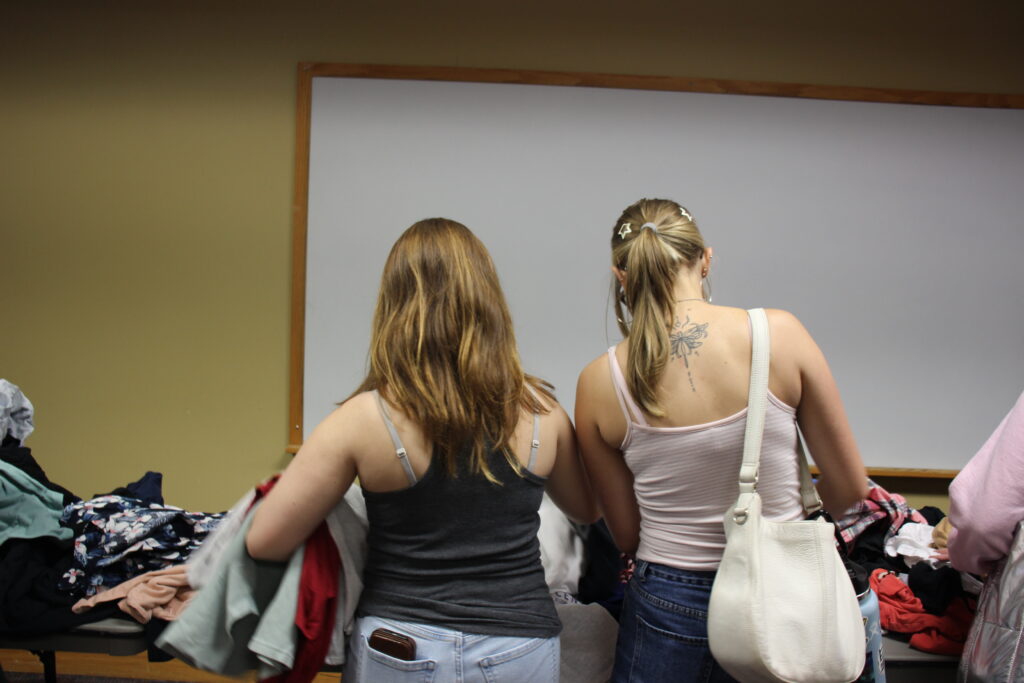
Fashionable thrifters dig through the piles of donated tops. Photos by Tatum Gordon. 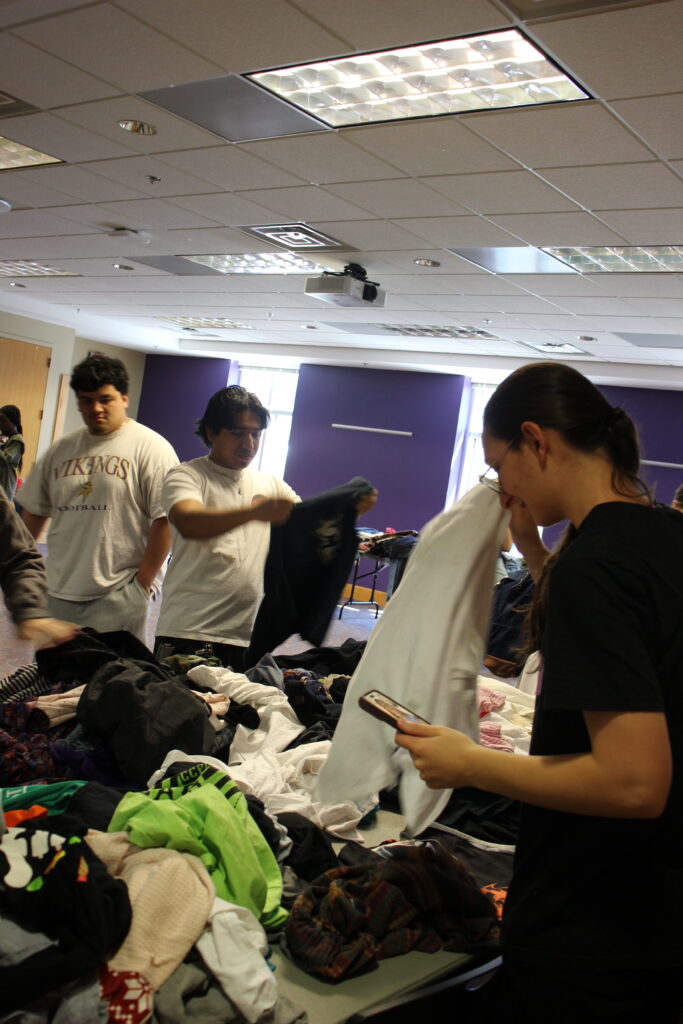
Thrifters find the perfect top for the start of the summer. Photo by Tatum Gordon. 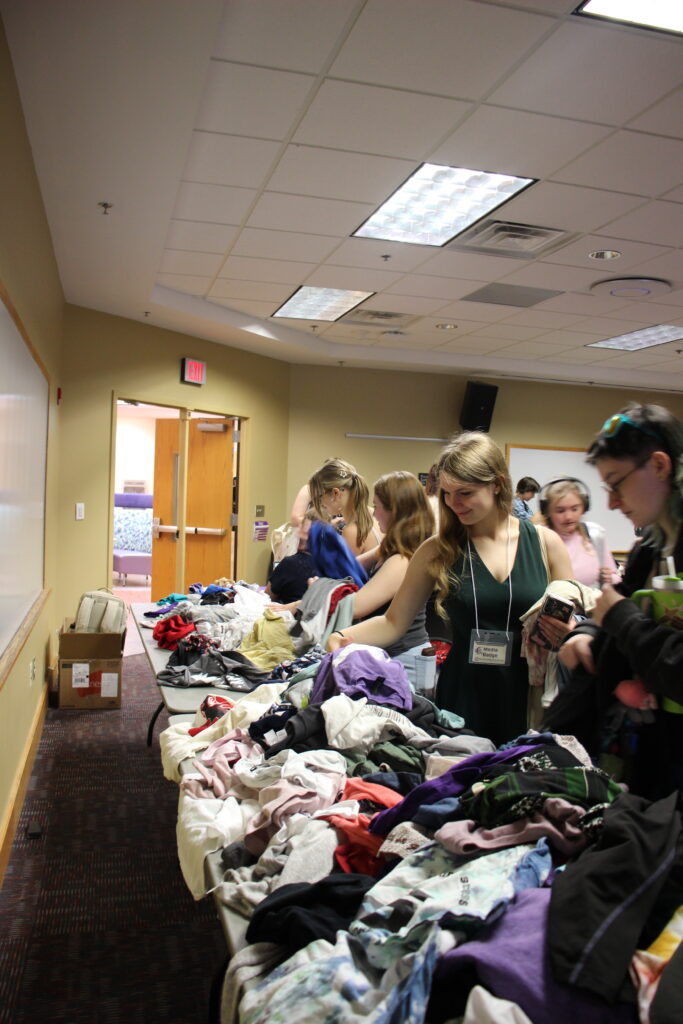
Eager students starting their search through the small tops. Photos by Tatum Gordon. 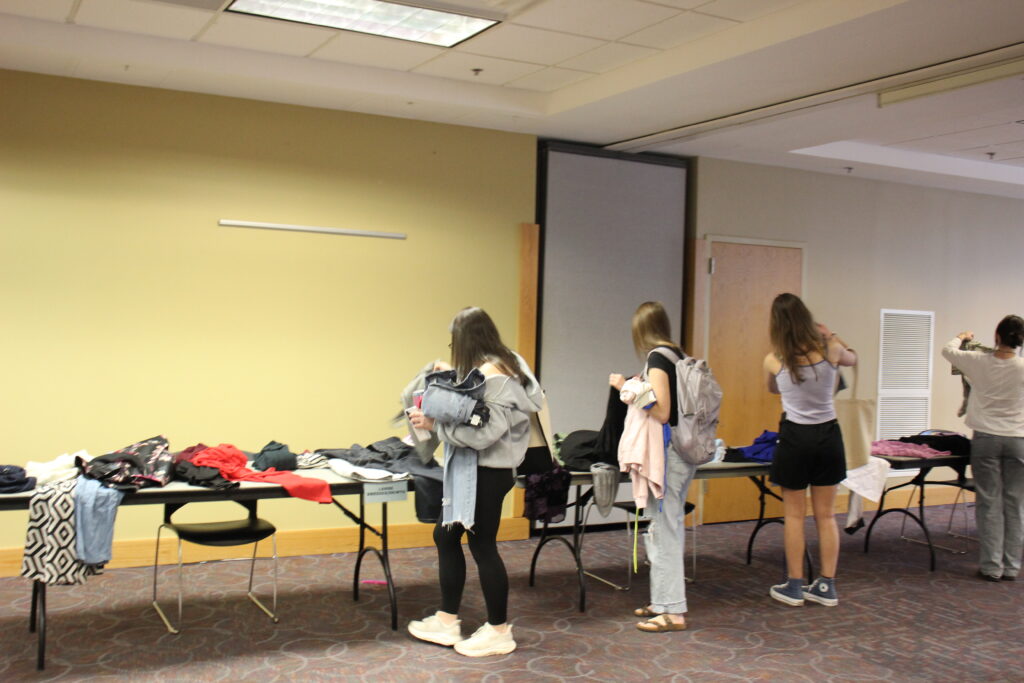
Students finalizing their stylish pics before leaving. Photos by Tatum Gordon. Students quickly go through the medium sized tops to find the perfect item. Photo by Tatum Gordon.
As awareness continues to grow, thrifting is no longer just a trend, it is part of a broader shift in how consumers approach fashion, waste and environmental responsibility. For many, choosing secondhand is not only a financial decision but a conscious effort to reduce their environmental footprint and support a more sustainable future.