Story by Cory Vaillancourt published in the Smoky Mountain News Feb. 4 ed. Republished
As Jackson County heads toward the March 3 primary election, voters are being asked to assess a governing record shaped by rising costs, cultural conflict, a steady expansion of county government and mounting public concern.
Over the last four budget cycles, Jackson County’s general fund has grown from $71.7 million in fiscal year 2021–22 to $106.9 million in the adopted 2025–26 budget — an increase of about 49%.
The general fund rose to $88.1 million in 2023–24 and then $93.8 million in 2024–25, before crossing $100 million in the current fiscal year.
That growth has not been driven by major new programs but by compounding operational pressures that pushed spending higher year after year. Read more…
The Republicans
Unlike some counties where the board elects its own chair from among seated members, Jackson County’s voters elect the commission chair.
The present chair Mark Letson has drawn three Republican Primary Election opponents; however, David Rogers was the only challenger to respond to an interview request by The Smoky Mountain News.
“I am the type of person that I have spent my life listening to problems, even if it’s a car. I spent my life listening and figuring out ways to help people. Past 25 years, I’ve done that, and I think I could carry that over to a county leader,” Rogers said. “I am a Republican, but that don’t mean I can’t help a Democrat.”
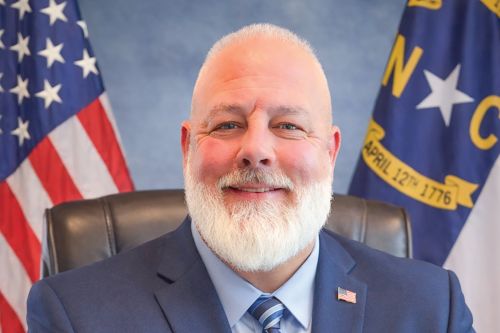
Born and raised in Haywood County, Rogers grew up playing about every sport he could, walking on to the football team at Appalachian State University before transferring to Western Carolina University. He later earned a baseball scholarship to Montreat College but ultimately entered the automotive service industry, first working at Allison Chevrolet before spending 19 years at Andy Shaw Ford, where he led the service department for more than a decade. He now works at Hillman Family dealerships.
Opposition to the county’s recent property tax increase was a central motivation for Rogers’ candidacy. He framed the issue as one of management rather than revenue, arguing that government should focus on efficiency and accountability before asking taxpayers for more money.
Rogers tied that view directly to his experience overseeing large service departments, where he said performance expectations mattered more than staffing levels.
“I don’t agree with that [tax increase]. I don’t think we needed it. I think we have plenty of money to do what we need to do,” Rogers said.
Rogers supports Jackson County’s decision to withdraw from the Fontana Regional Library system. He said his position was formed after reviewing so-called objectionable materials himself rather than relying on secondhand accounts. At the same time, Rogers acknowledged that formal procedures exist for challenging library materials and said those processes should be followed.
When asked whether the projected increase in annual cost of operating the county’s libraries independently was worth it, Rogers declined to commit to a firm answer without professional guidance available only to seated commissioners.
On the removal of interpretive plaques from Sylva Sam, Rogers avoided taking a position on whether the plaques should be restored. Instead, he focused on how the decision was made, arguing that actions involving long-standing public symbols require public involvement.
“I feel like it needs to be very transparent,” Rogers said.
Attendance and participation are baseline expectations for commissioners, Rogers said, particularly because board members are appointed to committees and outside boards. He said he would approach committee service deliberately, rather than treating it as optional as Hooper and Smith have.
Rogers supports the Board of Elections’ decision to close the early voting site at Western Carolina University and believes any resulting savings should be reinvested to strengthen staffing and operations at remaining polling locations.
He also raised concerns about transparency surrounding the county’s middle school project, saying public frustration stemmed from how decisions were communicated rather than from the outcome itself. Rogers repeatedly emphasized that early explanation and open communication are essential to maintaining public trust.
On affordable housing and child care, Rogers said county government has a role in facilitating solutions, particularly by identifying and pursuing grant opportunities that may otherwise go unused. He described both issues as practical challenges affecting families and employers across the region.
Despite his lack of experience on government, Rogers does have an ace in the hole — his brother Brandon is the popular longtime vice chair of the Haywood County Board of Commissioners and has substantial experience dealing with issues both small and large, including multiple trips to Washington, D.C., to advocate for disaster relief funding.
“[If] I run into issues, I’ve got a person that can sit there and give me some good moral advice,” he said.
Mark Letson
From Letson’s perspective, the decision not to remain revenue neutral after the countywide reappraisal was driven by long-deferred capital needs and rising operational pressures that could no longer be postponed. He pointed to school construction and renovation projects, courtroom deficiencies and jail overcrowding as compounding problems that were already generating added costs, including the expense of housing inmates in other counties and the risk of court delays. Addressing those needs, he said, required a shift in direction even as commissioners look for opportunities to rein in spending elsewhere.
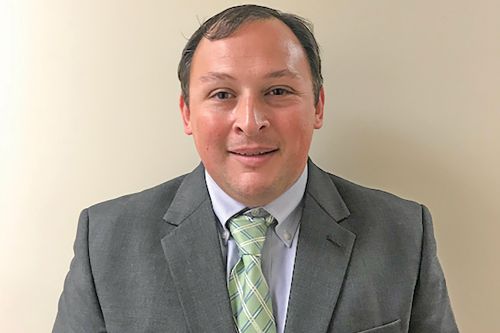
Born in Rome, Georgia, Letson attended Mississippi State University and later Louisiana State University, where he earned a degree in interdisciplinary studies with a focus on sociology, communication and business, followed by a certificate in construction management. His professional career began in the Hilton Head area as a golf course superintendent before moving to Cashiers, where he worked for Trillium for 18 years. He later transitioned into residential construction.
Opposition to the county’s withdrawal from the Fontana Regional Library system has placed Letson at odds with the majority of the board. He has continued to argue that the libraries have been a net benefit to Jackson County, both financially and in terms of community services.
He acknowledged that individual books can and should be challenged through established procedures but said those concerns do not justify dismantling a system that has provided library services and programming for eight decades. Letson also expressed concern about legal exposure and escalating costs, particularly as library employees are absorbed into county pay and benefits structures.
“Some of them will get more money than they’re currently making, not including additional benefits like health insurance, retirement and the like,” he said.
Letson took a similar process-focused approach to the controversy surrounding the removal of interpretive plaques from Sylva Sam. He said he did not support removing the plaques and believes the compromise reached in 2021 struck a workable balance, particularly given the county’s reliance on tourism.
“I don’t feel that having a rebel flag is where we should be in 2026,” Letson said, warning that symbolism matters in a county where the economy depends heavily on visitors.
While acknowledging public frustration about commissioner attendance and accountability, he said scheduling conflicts and the structure of daytime meetings complicate participation but noted that informal discussions about censuring Hooper and Smith took place.
“We talked about that with John [Kubis], our county attorney,” Letson said. “We had kind of a private conversation with those individuals, and really it comes down to, ‘Is there consensus to do that?’ And there wasn’t.”
On the Board of Elections’ decision to close the early voting site at Western Carolina University, Letson said the projected savings are modest relative to the county’s budget and questioned whether the controversy was worth the tradeoff, particularly for students without reliable transportation.
Beyond those flashpoints, he highlighted ongoing work on child care expansion, domestic violence services, housing initiatives and economic development projects aimed at diversifying the county’s workforce and recreational opportunities. He described those efforts as necessary steps toward long-term stability.
His guiding principle, he said, has been weighing whether decisions benefit the county as a whole, or merely a single constituency.
Jarrett Crow and Jon Brown are also running for the chair of the county commission in the Republican ballot.
The Democrats
The defining issues in Jackson County are not symbolic fights but center on transparency, fiscal responsibility and whether county government is meeting residents’ most basic needs, says Marcia Almond.
Almond has lived in Forest Hills for 37 years. A registered nurse, she spent nearly four decades working in operating rooms before entering local government. Almond served four years on the Forest Hills Town Council and two years as mayor until losing the seat, 56-37, to former commissioner Ron Mau last November.

Regarding the county’s most recent property tax increase, Almond said the magnitude of the revaluation, rather than the mechanics of the tax rate itself, has left residents reeling.
“I don’t think anybody in the county is happy about it,” Almond said. “I realize real estate prices have gone up, but I think that was — what did I read — a 60% increase in property values in the last four years? That’s big jump. That’s the biggest jump I’ve ever seen happen here in Jackson County.”
Looking ahead to the 2027–28 budget cycle she would inherit if elected, Almond said she would want to return to a conservative approach but questioned whether recent decisions have made that feasible.
“I’d like to do something to make the budget revenue-neutral,” Almond said. “However, we have things going into our budget right now that I don’t think we’re going to be able to pay for this library thing. They lowballed us on what it would cost us for the library, and that’s going to come out of our general fund.”
Almond strongly opposes the county’s withdrawal from the Fontana Regional Library system, framing the decision as both financially reckless and culturally driven.
“It’s just fiscally irresponsible,” she said. “What we have was working quite well and now it’s going to cost us more, and we won’t have as good a library if we leave Fontana system.”
She said the cultural motivations behind the vote were impossible to ignore.
“And that brings me to the second part, the sheer bigotry of it all,” Almond said.
If elected after the county formally exits the regional system, Almond said she would support rejoining Fontana if possible, though she acknowledged that door may already be closing.
“We don’t know that they want us back,” she said.
On the removal of interpretive plaques from the Confederate monument known as Sylva Sam, Almond focused on process rather than symbolism, saying the lack of a public vote undermined trust and likely violated the law.
“This was obviously done through a text meeting or a private meeting — somehow not open to the public — and that’s against the law,” she said. “It just lends itself to the lack of transparency that we’ve been trying to point out, that things are done behind closed doors, and that’s not legal.”
Almond said the combined effect of the library controversy and the monument decision risks damaging Jackson County’s tourism-driven economy.
“We’ve built a reputation of being an unfriendly place for people to come,” she said. “Word gets around, especially in the world of social media. It gets around, and you know whether or not you’re welcome someplace.”
Attendance and accountability are not optional, Almond said, pointing to her own record as mayor and regional commission member.
“Going to those meetings is part of the job,” she said.
Beyond those flashpoints, Almond said county government must refocus on practical issues residents face daily, including housing, transportation and child care.
“You cannot support a workforce if you don’t have childcare,” she said.
At the core of her candidacy, Almond said, is a desire to restore openness and legitimacy to county government.
“I want to see some transparency and legitimacy in government,” she said. “I don’t like the closed-door meetings. I don’t like the total shutdown of people on the board that refuse to take any constituents’ opinions into account.”
Bobbi Hopp
For Democrat Bobbi Hopp, the library fight has become the clearest test of whether Jackson County’s current leadership is actually living up to that standard.
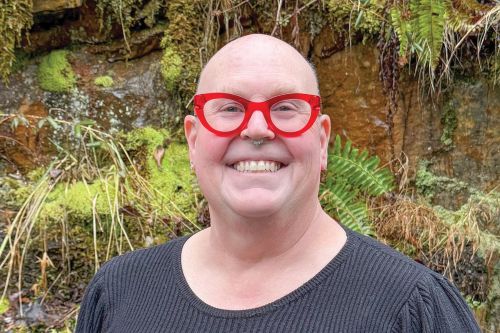
Hopp is transgender but said they do not want their candidacy defined by identity. Instead, Hopp pointed to a professional background that spans finance, engineering, disaster response and nearly two decades of federal service as evidence they are prepared to govern a complex county.
Born in Detroit and raised primarily in Sarasota, Florida, Hopp attended the University of Colorado in Boulder before spending time in Montana and later returning to Florida. After working for 11 years as an independent stock trader, they went back to school and earned a bachelor’s degree in computer engineering from the University of South Florida.
Hopp was then hired by the Navy as a civilian engineer, where they worked for 19 years on important large-scale defense projects involving nuclear submarines, weapons systems and software safety. Their responsibilities included overseeing contractors like Lockheed Martin and Boeing and managing billion-dollar programs with an emphasis on cost control and human safety.
Earlier in their career, Hopp also worked in disaster response through the University of South Florida’s Center for Robot-Assisted Search and Rescue, contributing to hurricane response, mine collapses and structural failures. That experience, they said, reinforced the importance of preparation and competent public administration.
Hopp left federal service in 2024, citing changes under the Trump administration that made it increasingly difficult to do the job responsibly.
“I saw the writing on the wall after the election, and they offered us kind of an early out,” Hopp said. “We had bought a home here in the mountains four years ago, and so I took advantage and moved full time, and I’m enjoying my retirement.”
They described travel restrictions and a shift toward handing oversight to the contractors themselves as undermining accountability and effectiveness, prompting many experienced federal employees to leave.
On taxes, Hopp believes in paying a fair share but questioned whether county leaders are being responsible stewards of public money. They argued that the library fight exemplifies misplaced priorities.
“I don’t feel like the county is using our tax money in the most efficient way right now,” said Hopp.
Their opposition to withdrawing from the Fontana Regional Library system is rooted both in personal history and fiscal concerns. Libraries, Hopp said, were central to their childhood education, and the regional system provided services and cost sharing that benefited Jackson County. More than the outcome, however, Hopp said the process revealed a refusal to listen.
“I feel like the public wasn’t heard,” Hopp said. “When a large group of people shows up and says they don’t like something, it’s incumbent upon you as a public servant to slow down and listen.”
That same emphasis on legality and process shapes Hopp’s view of the Sylva Sam controversy. While expressing discomfort with honoring the Confederacy, they said commissioners should never violate the law or abandon negotiated compromises.
“As a federal employee, I had to be very careful for 19 years about not making myself in violation of federal law,” Hopp said.
Hopp also tied recent controversies to tourism, environmental protection and quality of life, arguing that exclusionary politics threaten an economy dependent on visitors, students and outdoor recreation. Attendance failures and ethics lapses by sitting commissioners, they said, further erode public trust and warrant accountability, including censure when necessary.
At the core of Hopp’s candidacy is a simple contrast with the incumbent board’s approach.
“If you’re not willing to hear people who disagree with you,” Hopp said, “you’re not serving them.”